The Roots: From Namaste to Elevated Practice
Suspended in mid-air, swaying gently in a silk hammock, and defying gravity—this is where yoga takes flight. Aerial yoga isn’t just a trend; it’s a transformative journey that fuses ancient yogic wisdom with the thrill of movement in space. It’s both a return to your inner stillness and an exploration of freedom beyond the mat.
In this blog, we’ll unravel what aerial yoga really is, how it connects to traditional yoga philosophy, and how you can gracefully navigate the joys and challenges that come with it. Whether you’re a beginner curious about floating poses or an experienced yogi looking to deepen your practice, this is your invitation to go beyond namaste—into balance, courage, and bl
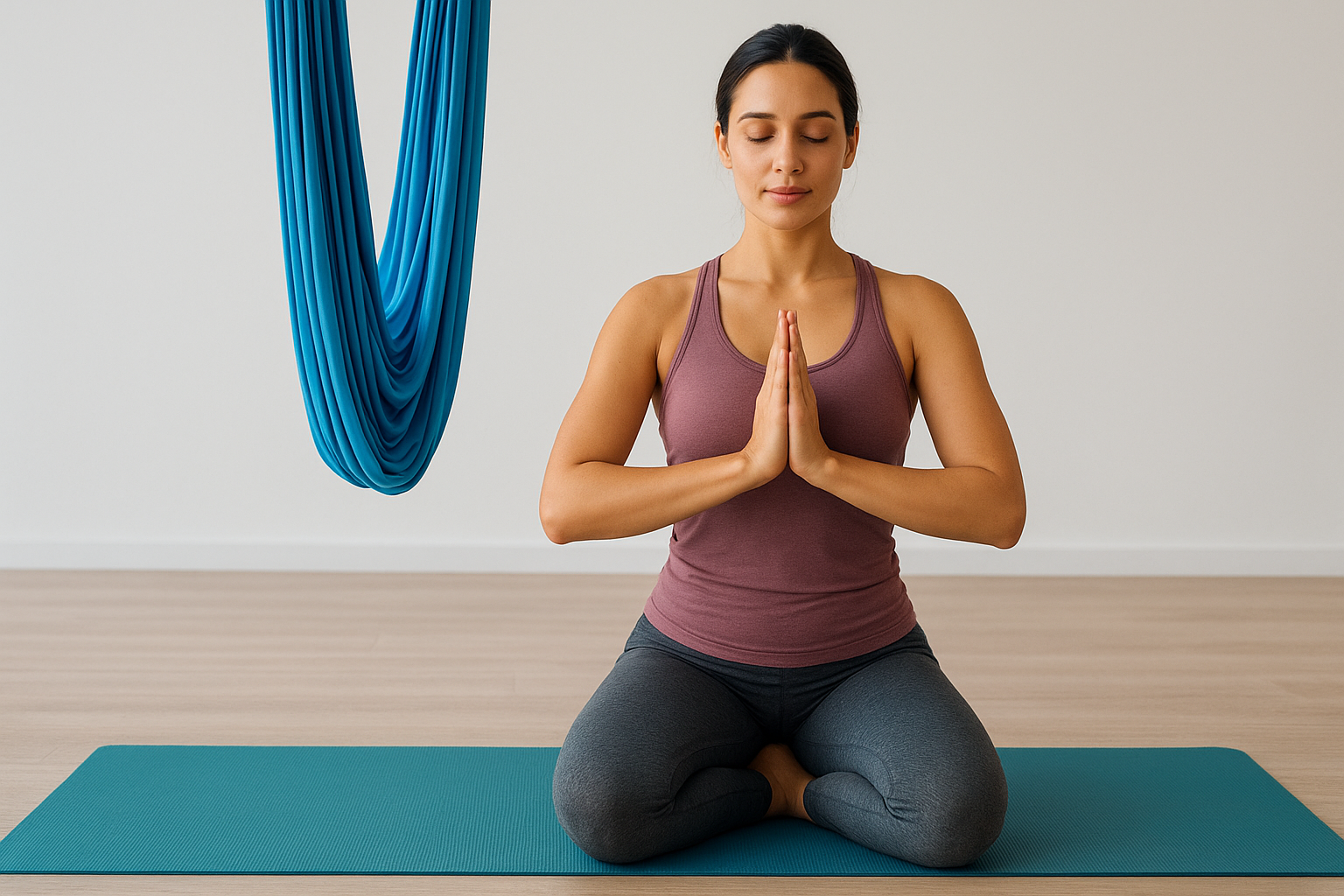
The Essence of “Namaste”
The word Namaste beautifully translates to “the divine in me bows to the divine in you.” It signifies unity, respect, and the acknowledgment of shared consciousness. Traditional yoga, rooted in this philosophy, teaches us connection—to our bodies, breath, and the world around us.
The Evolution Into Aerial Yoga
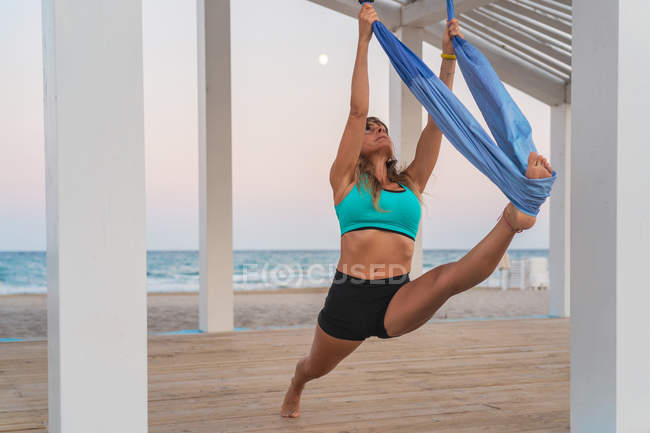
Aerial yoga, also known as anti-gravity yoga, evolved in the early 2000s as a creative blend of yoga asanas, dance, and acrobatics using a hammock or sling suspended from the ceiling. While it might seem modern, its core essence remains aligned with yoga’s timeless goals: union, awareness, and inner balance.
The hammock acts as both a support and a challenge—it helps deepen stretches, improve alignment, and inspire a sense of play. As you float upside-down, hanging effortlessly, a whole new perspective opens up—literally and spiritually.
The Joy of Taking Flight
1. Freedom and Playfulness
Aerial yoga reminds you of the child within—the one who used to love swinging from trees or hanging upside-down. This element of play is deeply therapeutic. It breaks mental rigidity and reconnects you with joy, curiosity, and light-hearted exploration.
2. Unique Physical Benefits
This practice offers a blend of strength, flexibility, and balance training like no other form of yoga.
- Spinal decompression: Inversions in the hammock gently elongate your spine and release pressure, countering the effects of long hours spent sitting.
- Core activation: Every pose in aerial yoga demands engagement from the abdomen and obliques for stability.
- Joint relief: Since your body weight is partially supported, aerial yoga is more forgiving on joints while still offering a full workout.
- Improved circulation: Inverted poses boost blood flow to the brain and help regulate the lymphatic system.
3. Mental and Emotional Liberation
There is an undeniable sense of trust involved in aerial yoga—trusting your silk hammock, your instructor, and most importantly, your own body. This surrender creates emotional resilience. As you learn to hang upside-down gracefully, fears start dissolving—fears of falling, failing, or letting go. Each playful swing becomes a meditation in motion.
4. Connection to Breath and Flow
The fluidity of aerial yoga beautifully synchronizes with pranayama. Your breath becomes your stabilizer, your invisible safety net. Flowing movements guided by breath turn the practice into a full-bodied meditation—exhilarating yet grounding.
The Challenges: Beyond the Floating Illusion
1. Fear of Falling
For many beginners, the idea of hanging from fabric can trigger anxiety. Overcoming this fear is part of the process. Each class builds courage—not only in your physical practice but also in how you respond to uncertainty in life.
Tip: Start with basic poses close to the floor. Familiarity breeds confidence.
2. Core and Grip Strength
Aerial yoga challenges muscles you may have never fully engaged before. Expect soreness, especially in your arms and core. Instead of resisting it, celebrate these sensations as signs of growth.
Tip: Incorporate gentle mat-based core work and stretching between aerial sessions to support muscular balance.
3. Trust and Patience
Progress in aerial yoga doesn’t come overnight. It demands patience, trust, and humility. Much like traditional yoga, the real magic unfolds when you stop chasing “perfect” poses and start embracing presence.
Mantra: “I am exactly where I need to be in this pose and in my practice.”
4. Body Awareness and Adjustments
Unlike practicing on the mat, aerial yoga involves a third dimension—height. Misalignment can lead to discomfort or even dizziness. Learning correct anchoring, posture, and breath alignment takes time but soon becomes second nature.
Aerial Yoga on the Mat: Finding Balance Between Earth and Air
While aerial yoga invites you to float, every journey begins—and ends—on the ground. The mat remains your anchor. Returning to it after a session helps integrate sensations, calm your nervous system, and embody the lessons you found in mid-air.
Try weaving aerial-inspired mindfulness into your mat practice:
- Slow, wave-like transitions echoing the gentle swinging movements.
- Focused breathwork to recreate the floating sensation without leaving the ground.
- Deeper awareness of stability and release—learning that balance exists between effort and surrender.
Even without hammocks, you can embody the essence of aerial yoga: freedom, courage, and play.
Mindfulness in Motion: The Energy Shift
Aerial yoga is a dance between gravity and grace. As you invert and twist, your energy centers—the chakras—respond vividly.
- Heart-opening poses expand Anahata, inviting compassion and joy.
- Upside-down postures awaken Ajna (the third eye), sharpening clarity and intuition.
- Grounding moments in Savasana reconnect Muladhara to calm after the aerial flow.
Each flight becomes an energy realignment—a conversation between spirit and sky.
Common Misconceptions About Aerial Yoga
“I’m not flexible enough.”
Flexibility is not a prerequisite—it’s a result. The hammock allows partial weight support, making deep stretches accessible for all levels.
“It’s just for performers or gymnasts.”
Although aerial yoga looks acrobatic, it’s designed for everyone. Instructors tailor sequences according to ability. The focus isn’t on performance but awareness and balance.
“It’s not real yoga.”
Aerial yoga honors traditional yoga’s core values—breath, mindfulness, and harmony. The tool (the hammock) simply expands your ability to explore space, movement, and surrender.
How to Prepare for Your First Aerial Yoga Class
- Wear fitted clothing—loose outfits can snag on the hammock fabric.
- Avoid jewelry or zippers that might damage the silk sling.
- Eat light—a heavy stomach can make inversions uncomfortable.
- Arrive early to adjust straps and familiarize yourself with the setup.
- Communicate any injuries to your instructor beforehand.
Remember: there’s no need to “perform.” The goal is presence, not perfection.
Integrating Breathwork and Meditation
Aerial yoga offers the perfect pause between action and stillness. After your dynamic sequences, wrapping yourself in the hammock for cocoon meditation is bliss. The gentle sway soothes your nervous system, while breath awareness quietens the mind.
If you can’t attend a class, bring that spirit to your mat:
- Lie down in Savasana and visualize weightlessness.
- Inhale courage; exhale surrender.
- Feel the gentle rhythm of your heartbeat, mirroring the rise and fall of flight.
This is where Namaste transcends the greeting—it becomes a lived experience of unity.
The Inner Transformation
Aerial yoga is not just about mastering poses; it’s about mastering balance within chaos. Hanging upside-down rewires how you perceive control. You begin to see that release does not mean loss but trust.
You begin to feel yoga—not as shape or sequence—but as breath, courage, and joy embodied in motion.
Every flip, twist, and inversion becomes a metaphor for life:
- Sometimes you must trust the fabric before stepping off.
- Sometimes balance means letting go of control.
- Sometimes clarity is found only when the world turns upside-down.
Bringing It All Together: Namaste Reimagined
“Namaste and Beyond” is about expanding your yoga from a ritual into a revelation. It’s realizing that yoga isn’t confined to a mat—it’s an attitude toward every challenge, suspension, and surrender life throws your way.
When you step into an aerial class, you carry your “Namaste” spirit within that silky hammock. It’s a practice of self-dialogue: the divine in you meeting your most fearless self.
And when the hammock stills, and your feet return to the earth, what remains is gratitude—for the body that trusted, the mind that quieted, and the heart that dared to soar.
Namaste and Beyond: Discover the Joy and Challenges of Aerial Yoga on Your Yoga Mat
Suspended in mid-air, swaying gently in a silk hammock, and defying gravity—this is where yoga takes flight. Aerial yoga isn’t just a trend; it’s a transformative journey that fuses ancient yogic wisdom with the thrill of movement in space. It’s both a return to your inner stillness and an exploration of freedom beyond the mat.
In this blog, we’ll unravel what aerial yoga really is, how it connects to traditional yoga philosophy, and how you can gracefully navigate the joys and challenges that come with it. Whether you’re a beginner curious about floating poses or an experienced yogi looking to deepen your practice, this is your invitation to go beyond namaste—into balance, courage, and bliss.
The Roots: From Namaste to Elevated Practice
The Essence of “Namaste”
The word Namaste beautifully translates to “the divine in me bows to the divine in you.” It signifies unity, respect, and the acknowledgment of shared consciousness. Traditional yoga, rooted in this philosophy, teaches us connection—to our bodies, breath, and the world around us.
The greeting is often used at the start and end of a yoga class, an embodiment of humility and mutual recognition. It represents an offering of respect and reminds us that yoga is more than a physical discipline—it is a spiritual dialogue between the self and the universe.
The Evolution Into Aerial Yoga
Aerial yoga, also known as anti-gravity yoga, evolved in the early 2000s as a creative blend of yoga asanas, dance, and acrobatics using a hammock or sling suspended from the ceiling. While it might seem modern, its core essence remains aligned with yoga’s timeless goals: union, awareness, and inner balance.
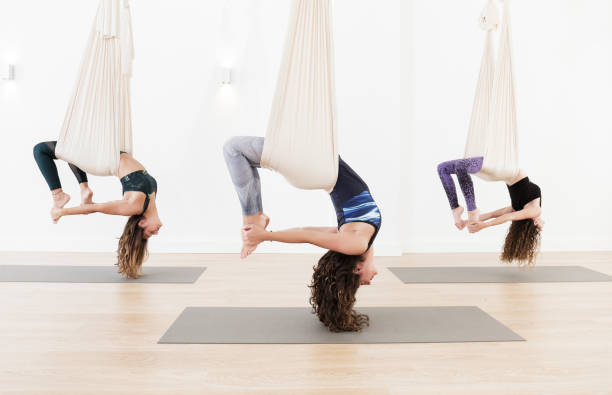
Inspired by aerial arts like circus silks, aerial yoga was popularized by yoga instructors aiming to add a new dimension to conventional practice. It combines elements of traditional yoga poses, Pilates, and aerial dance for a full-body workout that challenges strength, flexibility, and mental presence. The hammock acts as both a support and a challenge—it helps deepen stretches, improve alignment, and inspire a sense of play. As you float upside-down, hanging effortlessly, a whole new perspective opens up—literally and spiritually.
The Joy of Taking Flight
1. Freedom and Playfulness
Aerial yoga reminds you of the child within—the one who used to love swinging from trees or hanging upside-down. This element of play is deeply therapeutic. Playfulness breaks mental rigidity and reconnects you with joy, curiosity, and light-hearted exploration.
This fun, playful aspect encourages you to experiment fearlessly with movement. It offers an antidote to the rigidity and seriousness that life often demands. In the hammock, there’s space for laughter, surprise, and discovery—a moving meditation infused with lightness.
2. Unique Physical Benefits
This practice offers a blend of strength, flexibility, and balance training like no other form of yoga.
- Spinal decompression: One of aerial yoga’s most celebrated benefits is spinal detoxification. When you hang upside-down or let your body lengthen in a supported backbend, the vertebrae gently separate, helping to relieve compression that often causes discomfort or poor posture.
- Core activation: Every pose in aerial yoga demands engagement from the abdomen and obliques for stability. Holding suspended postures activates deep core muscles that are sometimes overlooked in floor-based yoga or everyday movements.
- Joint relief: Since your body weight is partially supported, aerial yoga is more forgiving on joints while still offering a full workout. This makes it accessible for people with mild arthritis or those recovering from impact injuries.
- Improved circulation: Inverted poses boost blood flow to the brain and help regulate the lymphatic system, enhancing detoxification and oxygen delivery for clearer mental focus.
- Enhanced proprioception: Navigating the hammock requires acute body awareness. You learn to fine-tune micro-adjustments, which can improve balance and coordination in daily life.
3. Mental and Emotional Liberation
There is an undeniable sense of trust involved in aerial yoga—trusting your silk hammock, your instructor, and most importantly, your own body. This surrender creates emotional resilience. As you learn to hang upside-down gracefully, fears start dissolving—fears of falling, failing, or letting go. Each playful swing becomes a meditation in motion.
The practice teaches patience and self-compassion, inviting you to cultivate a non-judgmental awareness of your limits and potential. Your mental narrative shifts from “I can’t” to “I’m learning,” fostering confidence that seeps far beyond the studio walls.
4. Connection to Breath and Flow
The fluidity of aerial yoga beautifully synchronizes with pranayama (breath control). Your breath becomes your stabilizer, your invisible safety net. Flowing movements guided by breath turn the practice into a full-bodied meditation—exhilarating yet grounding.
From gentle sways to dynamic transitions, each movement invites you to inhale openness and exhale tension. The hammock amplifies your ability to listen deeply to your breath, which ultimately anchors you in the present moment.
Common Aerial Yoga Poses on the Mat and in the Air
Understanding some common aerial yoga poses may help ease your curiosity or nervousness before stepping into your first class. Here are a few favorites:
- Flying Downward Dog (Adho Mukha Svanasana): Supported by the hammock, this inversion helps decompress the spine with less effort. It builds shoulder strength while elongating the hamstrings.
- Star Pose: Literally open your body into a wide star shape, supported by the hammock. This pose expands the chest and cultivates confidence and expansiveness.
- Aerial Splits: The hammock offers support to extend flexibility in the hips and legs with reduced strain versus on-the-floor splits.
- Cocoon Pose: Wrapped in the hammock, snuggled like a cocoon, this restorative pose soothes the nervous system and is perfect for meditation or final relaxation.
- Backbends: The hammock gently supports deep heart-opening backbends, which can be difficult on a mat without support.
Each pose can be modified according to your level, making aerial yoga an inclusive and evolving practice.
The Challenges: Beyond the Floating Illusion
1. Fear of Falling
For many beginners, the idea of hanging from fabric can trigger anxiety. Overcoming this fear is part of the process. Each class builds courage—not only in your physical practice but also in how you respond to uncertainty in life.
Learning to trust the hammock is a metaphor for learning to trust yourself: that even when you surrender, you are safe. This mindset ripples outwards, helping you face challenges with equanimity.
Tip: Start with basic poses close to the floor. Familiarity breeds confidence—seeing you can safely descend helps quiet the mind.
2. Core and Grip Strength
Aerial yoga challenges muscles you may have never fully engaged before. Expect soreness, especially in your arms and core. Instead of resisting it, celebrate these sensations as signs of growth.
Tip: Incorporate gentle mat-based core work and stretching between aerial sessions for muscular balance. Using grip-enhancing gloves or chalk may help with slipperiness.
3. Trust and Patience
Progress in aerial yoga doesn’t come overnight. It demands patience, trust, and humility. Much like traditional yoga, the real magic unfolds when you stop chasing “perfect” poses and start embracing presence.
Aerial yoga invites you to embrace imperfection and shifts focus away from achievement towards experience.
Mantra: “I am exactly where I need to be in this pose and in my practice.”
4. Body Awareness and Adjustments
Unlike practicing on the mat, aerial yoga involves a third dimension—height. Misalignment can lead to discomfort or even dizziness. Learning correct anchoring, posture, and breath alignment takes time but soon becomes second nature.
Listening to your body’s signals and communicating with your instructor helps you progress safely.
Aerial Yoga on the Mat: Balancing Earth and Air
While aerial yoga invites you to float, every journey begins—and ends—on the ground. The mat remains your anchor. Returning to it after a session helps integrate sensations, calm your nervous system, and embody the lessons you found in mid-air.
Try weaving aerial-inspired mindfulness into your mat practice:
- Slow, wave-like transitions echoing the gentle swinging movements.
- Focused breathwork to recreate the floating sensation without leaving the ground.
- Deeper awareness of stability and release—learning that balance exists between effort and surrender.
Even without hammocks, you can embody the essence of aerial yoga: freedom, courage, and play.
Mindfulness in Motion: The Energy Shift
Aerial yoga is a dance between gravity and grace. As you invert and twist, your energy centers—the chakras—respond vividly.
- Heart-opening poses expand Anahata, inviting compassion and joy.
- Upside-down postures awaken Ajna (the third eye), sharpening clarity and intuition.
- Grounding moments in Savasana reconnect Muladhara to calm after the aerial flow.
Each flight becomes an energy realignment—a conversation between spirit and sky.
Integrating Breathwork and Meditation
Aerial yoga offers the perfect pause between action and stillness. After your dynamic sequences, wrapping yourself in the hammock for cocoon meditation is bliss. The gentle sway soothes your nervous system, while breath awareness quietens the mind.
If you can’t attend a class, bring that spirit to your mat:
- Lie down in Savasana and visualize weightlessness.
- Inhale courage; exhale surrender.
- Feel the gentle rhythm of your heartbeat, mirroring the rise and fall of flight.
This is where Namaste transcends the greeting—it becomes a lived experience of unity.
The Inner Transformation
Aerial yoga is not just about mastering poses; it’s about mastering balance within chaos. Hanging upside-down rewires how you perceive control. You begin to see that release does not mean loss but trust.
You begin to feel yoga—not as shape or sequence—but as breath, courage, and joy embodied in motion.
Every flip, twist, and inversion becomes a metaphor for life:
- Sometimes you must trust the fabric before stepping off.
- Sometimes balance means letting go of control.
- Sometimes clarity is found only when the world turns upside-down.
Bringing It All Together: Namaste Reimagined
“Namaste and Beyond” is about expanding your yoga from a ritual into a revelation. It’s realizing that yoga isn’t confined to a mat—it’s an attitude toward every challenge, suspension, and surrender life throws your way.
When you step into an aerial class, you carry your “Namaste” spirit within that silky hammock. It’s a practice of self-dialogue: the divine in you meeting your most fearless self.
And when the hammock stills, and your feet return to the earth, what remains is gratitude—for the body that trusted, the mind that quieted, and the heart that dared to soar.
Final Reflection
Aerial yoga beautifully bridges the mystical with the physical—an invitation to go beyond form and into freedom. It’s playful yet profound, grounding yet liberating.
Whether you practice on the mat or in mid-air, remember:
- Your breath is your foundation.
- Your courage is your compass.
- Your joy is your true height.
So next time you whisper Namaste, know that it doesn’t end there. Go beyond—to where the mat meets the sky, and your yoga takes flight.