In a world where skincare routines and high-tech devices dominate the beauty scene, Face Yoga offers a refreshing, holistic approach. Rooted in the principles of mindfulness, facial anatomy, and natural rejuvenation, it harmonizes physical movements with deep breathing techniques to tone facial muscles, enhance blood circulation, and promote a youthful glow — all without invasive treatments.
Whether you’re exploring ways to lift sagging skin, release facial tension, or simply embrace a more natural beauty philosophy, this comprehensive guide will help you understand, practice, and benefit from Face Yoga like never before.
What Is Face Yoga?
Face Yoga is a combination of facial exercises, massage techniques, and mindful breathing designed to engage and strengthen the muscles beneath the skin of your face and neck. Think of it as a workout—but instead of squats and pushups for your body, you perform intentional movements to lift and tone your facial structure.
The concept rests on the idea that the muscles in your face, much like the rest of your body, can be trained and shaped. When done regularly, these exercises stimulate collagen and elastin production, improve lymphatic drainage, and help slow visible signs of aging.
Face Yoga also integrates mindfulness and self-awareness. The goal isn’t just aesthetic improvement—it’s about relaxing habitual expressions (like frowning or clenching), improving posture and breathing, and cultivating a stress-free glow from within.
The Science Behind Face Yoga
Skeptics often question whether facial exercises can truly counteract aging. Recent studies suggest they can.
A 2018 study published in JAMA Dermatology found that participants who practiced daily facial exercises for 20 weeks experienced visibly fuller upper and lower cheeks, with dermatologists noting measurable rejuvenation. The improvements stem from muscle hypertrophy — an increase in muscle mass under the skin — which provides a natural lift.
Moreover, consistent Face Yoga routines can:
- Increase blood flow, delivering more oxygen and nutrients to cells.
- Encourage lymphatic drainage, reducing puffiness.
- Lower stress hormone levels, helping prevent stress-induced breakouts or wrinkles.
These results combine the fields of anatomy, dermatology, and neuroscience — showing how muscle movement, relaxation, and mindfulness together affect both skin quality and self-perception.
Benefits of Practicing Face Yoga
Face Yoga offers both physical and emotional advantages. Below are some of the most notable:
1. Natural Face Lift
Targeted exercises sculpt cheekbones, define the jawline, and lift drooping eyelids. Over time, your face may appear more toned and youthful.
2. Improves Circulation
Gentle facial movements increase oxygenation and blood flow. This gives your complexion a fresh, radiant look similar to a post-exercise glow.
3. Reduces Puffiness and Dark Circles
By promoting lymphatic drainage, Face Yoga helps flush out toxins and excess fluids that cause puffiness around the eyes and cheeks.
4. Relieves Tension
Many people subconsciously clench their jaw or furrow their brow. These repetitive tensions cause fine lines and discomfort. Face Yoga helps release this muscular stress.
5. Enhances Mindfulness
Engaging with each micro-movement increases awareness of your expressions and emotions. You learn to soften habits of tension and approach your day with more serenity.
6. Boosts Confidence
The instant relaxation and visible improvements in tone create a sense of empowerment — knowing you are shaping your face naturally.
Core Principles of Face Yoga
To maximize results, Face Yoga follows five guiding principles:
- Awareness: Be fully present. Focus on each movement and muscle.
- Breath: Synchronize breathing with exercises. Slow, mindful breathing relaxes your nervous system and boosts oxygen supply.
- Consistency: Like any workout, results depend on frequency. Practicing at least 5 days a week yields noticeable improvement in 2–3 months.
- Posture: Good posture aligns facial muscles correctly, amplifying results.
- Relaxation: The goal is not strain but balance. Gentle effort helps achieve a firmer, more radiant face.
How to Start Face Yoga Practice
If you’re new to this, follow these basic steps:
- Find a quiet space. Use a mirror and relax your shoulders and neck.
- Remove makeup. Clean skin ensures smooth movements and prevents friction.
- Apply a light face oil or serum. This minimizes tugging.
- Warm up your face. Gently tap from forehead to chin to activate circulation.
- Start with short sessions. Begin with 10 minutes a day, gradually increasing as you grow comfortable.
The 7 Best Face Yoga Exercises for Beginners
Consistent practice of these targeted moves can transform not just how you look, but how you feel.
1. The Cheek Lifter
Goal: Sculpt cheekbones and tone sagging skin.
- Open your mouth in an “O.”
- Fold your upper lip over your teeth.
- Smile wide to lift cheek muscles.
- Place fingers lightly on top of your cheeks and lift upwards.
- Hold for 10 seconds, relax, and repeat five times.
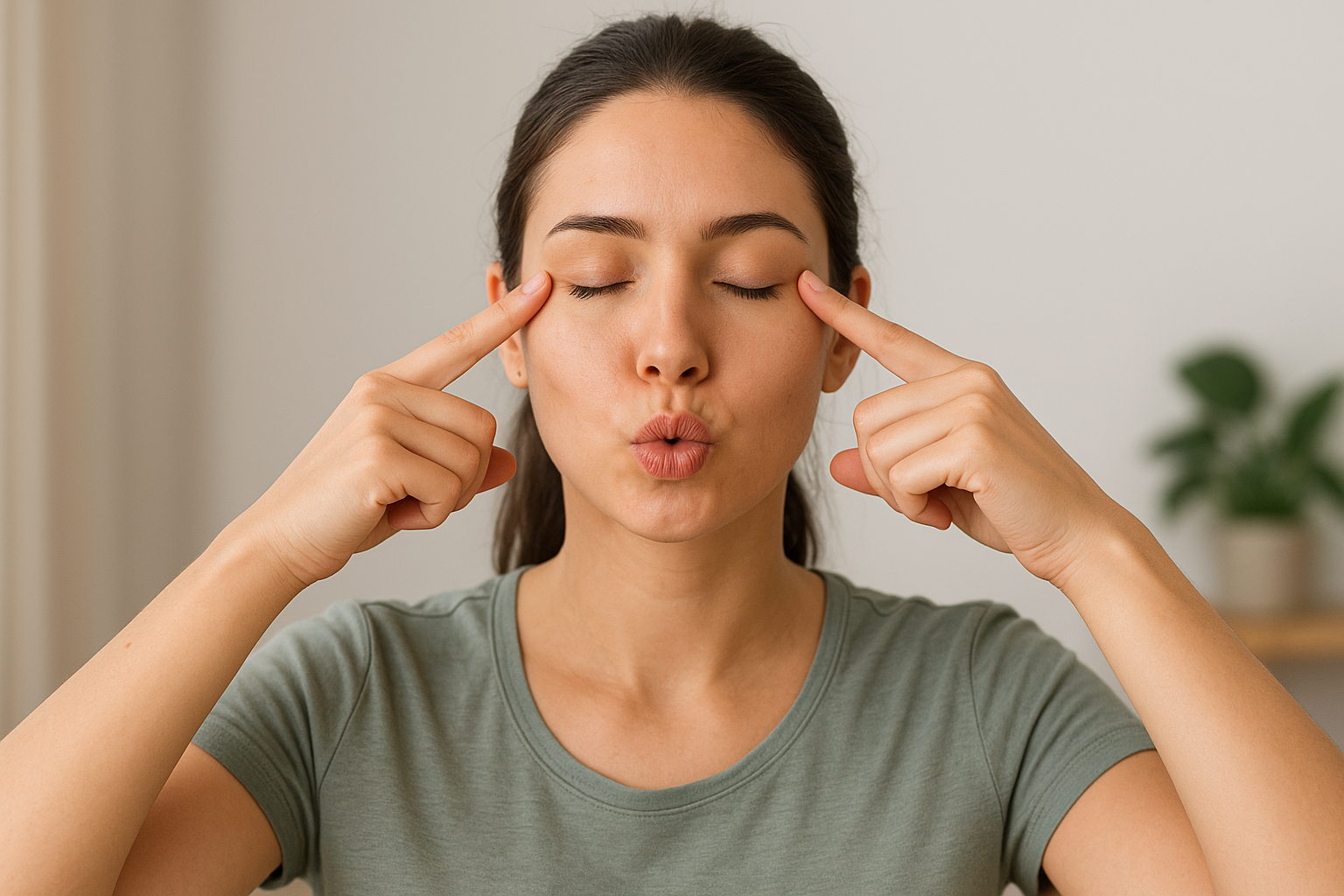
2. The Eye Brightener
Goal: Reduce puffiness and droopy eyelids.
- Form “binoculars” by placing your index and middle fingers around each eye.
- Gently press the outer corners upward as you squint.
- Hold for 5 seconds, release, and repeat.
3. The Neck Tightener (“Giraffe Pose”)
Goal: Firm the neck and reduce double chin.
- Sit straight.
- Tilt head slightly back and place fingers on the collarbone.
- Push the tongue to the roof of your mouth.
- Hold for 10 seconds, exhale, and relax.
4. The Jaw Sculptor
Goal: Define jawline and reduce jowls.
- Tilt your chin upward.
- Bring your lower jaw forward to feel a stretch.
- Hold for 5 seconds, repeat 10 times.
5. The Forehead Smoother
Goal: Prevent forehead lines.
- Place both palms on your forehead.
- Gently sweep them outward while raising eyebrows.
- Repeat 10 times to relax tension.
6. The Smile Lift
Goal: Elevate and energize the mouth area.
- Close lips and smile widely.
- Hold your smile while pressing fingertips into corners of the mouth.
- Lightly resist and hold for 10 seconds.
7. The Under-Eye Detox
Goal: Drain fluid and awaken tired eyes.
- Place ring fingers under each eye.
- Look up as you mildly lift skin upward.
- Blink rapidly 10 times, then relax.
Common Mistakes to Avoid in Face Yoga
Success depends on precision. Avoid these typical errors:
- Overexerting facial muscles. Straining can deepen lines.
- Skipping warm-ups or using dry skin.
- Forgetting to breathe deeply during movements.
- Practicing inconsistently.
- Expecting instant results. Visible changes emerge gradually with steady practice.
Face Yoga Routine for Daily Practice
Here’s a 15-minute daily facial yoga sequence to begin your journey:
Morning (7 minutes)
- Cheek Lifter – 2 minutes
- Eye Brightener – 1 minute
- Forehead Smoother – 2 minutes
- Smile Lift – 2 minutes
Evening (8 minutes)
- Jaw Sculptor – 2 minutes
- Neck Tightener – 2 minutes
- Under-Eye Detox – 2 minutes
- Gentle tapping massage – 2 minutes
Combine with slow breathing for best effects. This routine energizes you in the morning and relaxes facial muscles at night.
Face Yoga for Specific Goals
For Anti-Aging
Focus on cheek lifts, eye openers, and forehead smoothers. These stimulate collagen and prevent sagging.
For Slimming the Face
Use jawline and neck-toning exercises. Pair them with mindful eating and hydration for faster results.
For Stress Relief
Integrate breathing and tapping routines that calm the mind. Tension release shows instantly in a softer, more open expression.
For Radiance
Massaging with circular motions and adding light acupressure on temples enhances microcirculation, giving you a healthy glow.
Integrating Mindfulness With Face Yoga
Mindfulness is the invisible power behind effective Face Yoga. When you synchronize breath, intention, and movement, each exercise becomes more than physical action—it becomes self-care in motion.
Practice slow breathing:
- Inhale as you prepare for a movement.
- Exhale as you release tension.
You can also add affirmations like:
“Every breath relaxes my face.”
“I release what I no longer need.”
This anchors emotional health to physical vitality, merging beauty and mindfulness seamlessly.
Tools and Accessories to Enhance Practice
While Face Yoga can be done with bare hands, these tools can deepen your routine:
- Gua Sha Stone: Improves lymphatic drainage and contouring.
- Jade Roller: Reduces puffiness and cools the skin.
- Facial Cupping Set: Stimulates collagen through gentle suction.
- LED Mask or Microcurrent Device: Optional for advanced toning sessions.
Remember to start naturally—tools should complement, not replace, muscle engagement.
Nutrition and Lifestyle for Face Yoga Success
Your outer glow mirrors your inner nourishment. Combine exercises with a holistic lifestyle:
- Eat antioxidant-rich foods: berries, leafy greens, citrus.
- Stay hydrated to maintain elasticity.
- Minimize sugar and alcohol, which break down collagen.
- Sleep 7–8 hours for nightly repair.
- Practice good posture—slouching affects how your face muscles sit.
Face Yoga vs. Botox or Fillers
| Factor | Face Yoga | Botox/Fillers |
|---|---|---|
| Cost | Free or low-cost | Expensive, recurring |
| Results Timeline | Gradual and natural | Instant but temporary |
| Risk Level | None, fully natural | Possible side effects |
| Longevity | Lasting with consistency | Requires maintenance |
| Emotional Benefits | Relieves stress, boosts self-awareness | Purely physical outcome |
For those seeking a more holistic route, Face Yoga wins through sustainability, safety, and emotional grounding. However, combining mindful facial massage with dermatological care can create balanced results.
The Mental and Emotional Impact of Face Yoga
Beyond visible aesthetics, many practitioners report deeper emotional well-being. Facial tension, often tied to suppressed emotions, melts with consistent relaxation techniques.
- Stress Dissolves: Releasing jaw tension can reduce anxiety.
- Mood Enhances: Smiling exercises trigger serotonin, your “happy” hormone.
- Confidence Improves: A brighter complexion reflects inner peace.
Face Yoga ultimately bridges outer transformation and inner harmony — a form of living meditation.
Face Yoga for Different Age Groups
20s: Prevention and Awareness
Develop habits early. Focus on posture, relaxation, and maintaining elasticity.
30s–40s: Strengthening and Toning
Target areas prone to sagging (cheeks, eyes, and jawline). Consistency here helps reverse early aging.
50s and Beyond: Regeneration and Lift
Slower but more profound results. Combine movements with massage oils and breathing exercises for deeper rejuvenation.
Advanced Face Yoga Techniques
When comfortable with basics, advance to these techniques:
- Resistance Training: Use your fingers as anchors while pushing muscles in the opposite direction.
- Acupressure Integration: Apply gentle pressure on points near temples, eyebrows, or jaw to release deeper tension.
- Dynamic Movements: Combine neck rolls, deep breathing, and shoulder opening to integrate full-body alignment.
These amplify both the aesthetic and mental benefits of your practice.
Real-Life Testimonials and Success Stories
Many practitioners worldwide swear by Face Yoga’s transforming effect. Common feedback includes:
- Noticeably lifted cheeks within 6–8 weeks.
- Softer forehead lines and reduced crow’s feet after two months.
- Improved sleep and reduced TMJ discomfort.
- Enhanced emotional balance and positivity.
Such results underscore a priceless truth — your face reflects your lifestyle, mindset, and energy. By nurturing yourself holistically, you shape beauty that radiates from within.
How Long Until You See Results?
Most people notice subtle changes — brighter complexion, reduced puffiness — within 2–3 weeks. Structural lifting often appears between 8–12 weeks of consistent practice.
Key to success is daily consistency, not intensity. Like body fitness, you build progress through ritual and patience.
Advanced Practices: Combining Face Yoga With Holistic Wellness
Once Face Yoga becomes a daily part of your life, enhancing it with complementary wellness techniques drives the transformation further. Radiant skin does not exist in isolation; it mirrors how you treat your entire body and mind.
Embracing Breathwork and Meditation
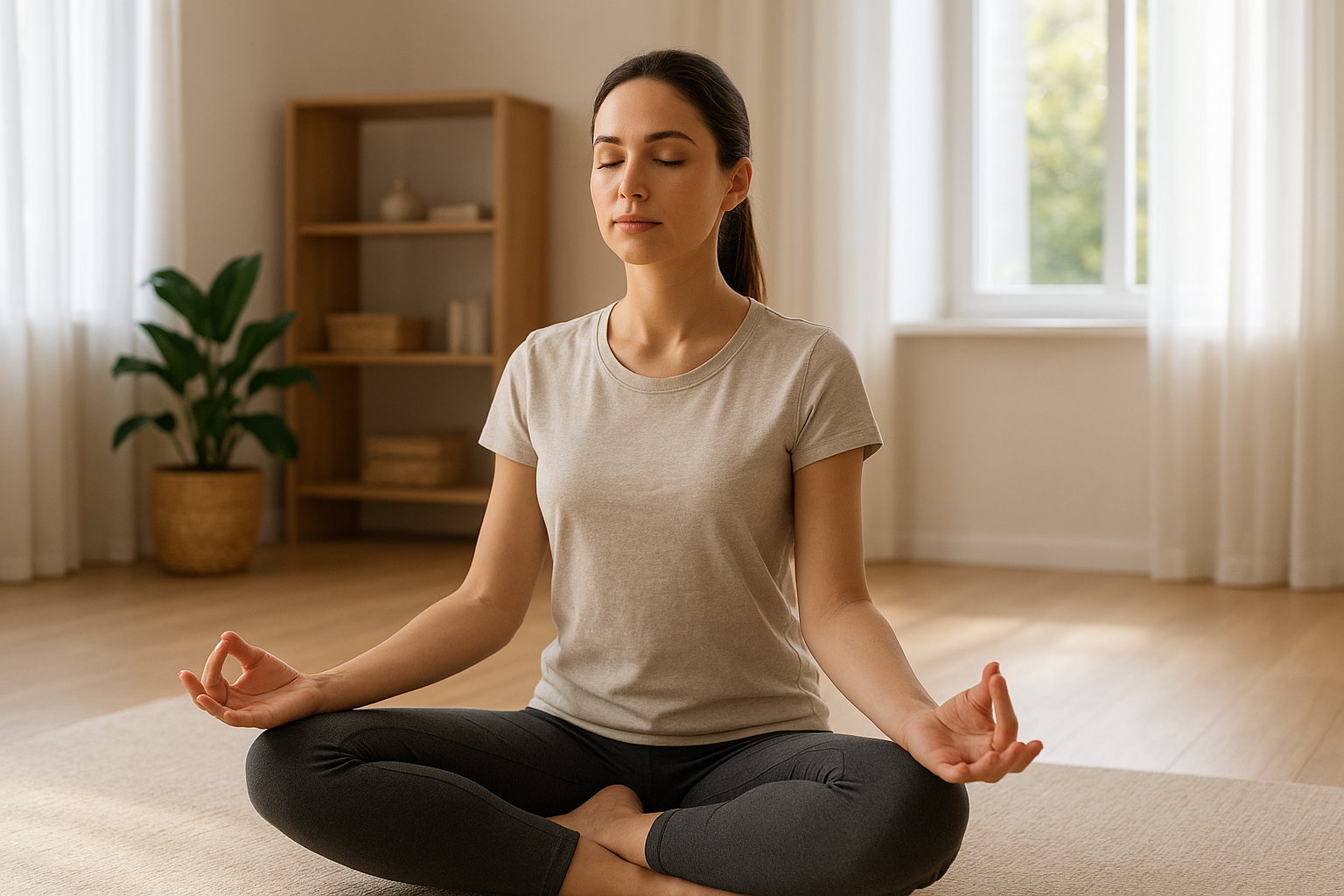
Your breathing affects every cell of your skin. Deep, slow breathing enhances oxygenation, which directly improves cellular renewal and elasticity. Integrating breathwork during Face Yoga sessions keeps your body in a calm parasympathetic state. When you inhale deeply before each movement, you synchronize inner peace with outer beauty.
Try a 5-minute breathing sequence before you begin:
- Sit upright with one hand on your heart and one on your belly.
- Inhale through your nose for four counts, hold briefly, exhale for six counts.
- Repeat 10 times while smiling gently.
This rhythm sets the emotional tone for your session, lowering cortisol levels and preparing your skin to respond beautifully to exercises.
Movement Beyond the Face
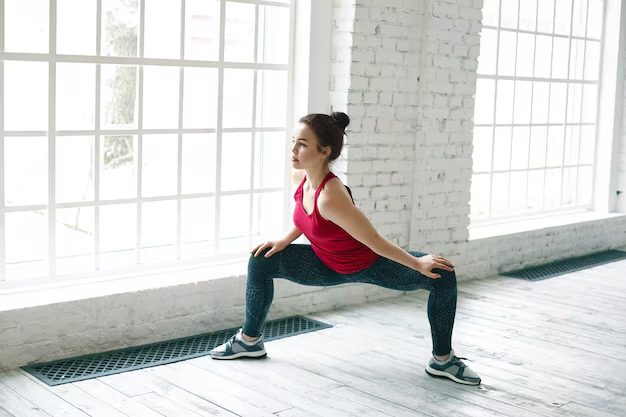
Whole-body alignment affects how your facial muscles rest. Slouched shoulders or rounded spines accentuate jaw tension and double chin formation. Practicing yoga postures like “Mountain Pose” or “Cat-Cow Stretch” strengthens posture and releases neck stiffness — vital for optimal Face Yoga results.
Incorporate stretches such as:
- Neck Rolls: Slow clockwise and counterclockwise rotations to ease stiffness.
- Shoulder Shrugs: Lift shoulders up and press back, feeling the release of tension.
- Upper Back Stretch: Interlace fingers behind you and open the chest.
These combine beautifully with facial movements, delivering integrated rejuvenation.
Aromatherapy and Face Yoga
Scents like lavender, rose, and frankincense are natural allies. When used as light facial oils or diffused during sessions, their calming properties deepen relaxation.
Frankincense boosts skin tone, while rose enhances hydration levels. Simply inhaling lavender reduces stress-induced facial tension that leads to wrinkles.
Pair a few drops with your evening practice — the combination turns a simple facial routine into sensory therapy.
The Emotional Journey of Face Yoga
Over time, Face Yoga becomes far more than an aesthetic exercise; it evolves into emotional exploration. Many practitioners recount how they begin noticing patterns — clenching their jaw during stress, raising eyebrows during concentration, or compressing lips when anxious.
By becoming aware of these micro-expressions, you start releasing the weight of emotions stored within facial muscles. Each practice becomes a gentle psychotherapy session performed through touch and mindfulness.
You start noticing:
- Softer facial lines as emotional release deepens.
- More genuine smiles stemming from inner calm.
- An increased connection between thoughts and physical sensations.
Face Yoga, in this sense, transcends outer beauty — it becomes a blueprint for inner balance and graceful living.
Establishing a Long-Term Routine
Sustainability ensures transformation. Consider structuring your routine into three progressive stages:
Phase 1 – Familiarization (Weeks 1–4):
Practice basic movements, learn muscle locations, and build discipline. Focus on light tapping and forehead relaxation.
Phase 2 – Strength Building (Weeks 5–12):
Increase motion intensity slightly; add resistance-based exercises for cheeks and jaw. Track weekly progress in photos to boost motivation.
Phase 3 – Maintenance and Integration (Month 4 onward):
Blend Face Yoga seamlessly with daily habits. Practice 10–15 minutes every morning, 5 minutes before bed. Add mindful affirmations for emotional balance.
Example affirmation:
“Every breath nourishes my skin with calm and strength.”
Consistency converts exercises into expressions of self-love, reshaping both energy and appearance.
Professional Guidance and Courses
For those wishing to refine techniques, certified Face Yoga instructors offer specialized programs. They customize sessions according to facial symmetry, muscle imbalance, and desired focus points.
Modern training platforms also provide virtual coaching, 3D anatomical insights, and feedback loops.
Working with a professional ensures safe, precise execution — especially when dealing with complex tension spots such as TMJ disorders or deep nasolabial folds.
Key benefits of guided sessions:
- Targeted correction of improper muscle engagement.
- Personalized progress tracking.
- Motivation from a structured, community-based practice.
Some practitioners combine Face Yoga retreats with nutrition workshops for complete wellness immersion — a growing trend across Asia, Europe, and the U.S.
Face Yoga Lifestyle: Practical Daily Habits
Small adjustments multiply results. Integrate these micro-practices throughout your day:
- Smile consciously when greeting others to energize facial muscles.
- Avoid resting your face on your palms while working.
- Practice two minutes of “jaw release breathing” after long meetings.
- Keep hydration constant; water shapes the smoothness of your skin.
Micro-habits built around mindfulness compound into visible long-term results. Every interaction becomes an opportunity to train the face toward serenity and strength.
FAQ: Face Yoga Essentials
1. What age should I start Face Yoga?
You can begin at any age. Teens benefit by preventing tension and improving posture awareness; adults use it to boost firmness and elasticity. Ideally, start in your 20s to maintain tone before aging signs appear.
2. How long must I practice before seeing results?
Consistency determines progress. Visible results usually appear within 8–12 weeks. Early benefits such as reduced puffiness and radiant skin can show up within two weeks.
3. Is Face Yoga safe for everyone?
Yes, when performed correctly. People with neurological conditions or skin injuries should consult a professional first. The techniques rely on gentle motion rather than forceful stretching.
4. Can I perform Face Yoga after cosmetic treatments?
It’s recommended to wait 2–4 weeks after fillers, Botox, or surgery to allow tissues to stabilize. Always consult your cosmetic specialist before resuming exercises.
5. What is the best time to do Face Yoga?
Morning sessions awaken your complexion; evening routines help detoxify and relax muscles before rest. Choose a consistent time that aligns with your rhythm.
6. Does Face Yoga replace skincare products?
No. It complements a quality skincare regimen. Moisturizers and oils aid smooth movement and nourish the epidermis while Face Yoga strengthens underlying muscles.
7. Can Face Yoga remove double chin?
Yes, focused exercises targeting the jaw and neck area (such as “Giraffe Pose”) help tone underlying muscles and stimulate fat mobilization when paired with overall body fitness.
8. How does Face Yoga affect mood?
Facial expressions directly connect to emotions. Relaxation exercises trigger endorphin release, reduce anxiety, and elevate mood — making you feel calmer and more confident.
9. Can Face Yoga worsen wrinkles if done incorrectly?
Over-exertion or incorrect movements may deepen fine lines temporarily. Always use gentle pressure, mirror feedback, and relaxation between reps. Precision matters more than intensity.
10. Should I use oil or cream?
Use light, non-comedogenic oils if your skin is dry, and serums for oily skin. These prevent unnecessary tugging and enhance glide during massage-like motions.
11. How can I combine Face Yoga with traditional yoga?
Start with 15 minutes of body stretches (Sun Salutation or Cat-Cow) followed by facial exercises. The combination boosts lymph flow and energizes your entire system harmoniously.
12. What time of year is best for results?
There’s no particular season, but winter or dry weather may require extra hydration to keep the skin supple. Summer routines benefit from cooling oils like cucumber or aloe.
13. Can Face Yoga help with TMJ pain?
Absolutely. By gently strengthening and relaxing jaw muscles, Face Yoga improves joint function and reduces stiffness. However, those with severe TMJ should consult therapists before attempting resistance exercises.
14. Are facial tools necessary?
No, but they can enhance circulation. Use tools like Gua Sha or rollers after core exercises for bonus toning and detox effects. Always pair tool use with ample oil and gentle motion.
15. Do men also benefit from Face Yoga?
Definitely. Facial aging and tension are gender-neutral. Men experience great improvements in jaw definition, skin smoothness, and relaxation from stress-related tightness.
The Modern Role of Face Yoga in Skin Health
As holistic skincare continues to evolve, Face Yoga stands at the intersection of mind, body, and science. Dermatologists increasingly view it as a complementary discipline — one that enhances professional treatments through natural toning and improved circulation.
Beauty influencers and celebrities have embraced Face Yoga not only for aesthetic appeal but for emotional resilience, self-connection, and sustainability. Its rise reflects a global movement toward “conscious beauty,” a philosophy that values wellbeing over perfection.
By practicing regularly, you become your own therapist, trainer, and healer. Your skin reflects harmony, balance, and vitality — all cultivated from within through awareness rather than intervention.
Closing Reflection: The Timeless Power of Self-Care
Face Yoga reminds us that self-care is multidimensional. It’s not confined to topical rituals or temporary fixes; it is the active celebration of existence through awareness, breath, and grace.
Every motion affirms your connection with authenticity. Every breath renews your relationship with your body. Every smile mirrors your inner joy.
The journey is simple but profound — give your face time, attention, and love, and it will return the favor through radiant expression and peaceful presence.
Begin your practice today. A mirror, your hands, and fifteen mindful minutes a day are all you need to sculpt both confidence and serenity — naturally and intentionally.