Yoga, a centuries-old practice that unites body, mind, and breath, has proven to be one of the most transformative disciplines available to us today. For children and beginners, yoga isn’t just about flexibility or physical strength—it’s also a gateway to mindfulness, enhanced focus, emotional regulation, and lifelong healthy habits.
Among the many branches of yoga, Kundalini Yoga and targeted Yoga for Weight Loss programs are especially effective for both boosting flexibility and improving overall wellness. When incorporated into primary class curriculums, these practices nurture physical development and mental balance at a formative age.
In this in-depth guide, we’ll explore the top yoga positions for primary classes, how to adapt Kundalini Yoga techniques for young learners, and how yoga for weight loss can be incorporated in a fun and engaging way.
Whether you are a teacher, parent, or yoga instructor, this complete resource will help you create transformative, age-appropriate yoga sessions that inspire children to love movement and mindfulness.
The Importance of Yoga in Primary Classes
Introducing yoga to children in their early school years has long-term benefits that go far beyond physical postures. Primary school-aged kids are naturally curious and active. They possess an innate sense of wonder and an ability to learn quickly through play and imitation. Yoga provides an ideal platform to channel this energy constructively.
Key Benefits of Yoga for Younger Students
- Enhances flexibility and posture: Children’s bodies are supple and still developing. Gentle stretching through yoga helps maintain healthy muscle growth, joint mobility, and good posture from an early age.
- Builds body awareness: Yoga teaches children to recognize their bodies’ movements and limitations, improving coordination and balance.
- Supports emotional well-being: Breathing exercises and mindfulness promote calmness, empathy, and better control over emotions, which improve classroom behavior and focus.
- Encourages healthy habits early on: When introduced during primary years, yoga becomes part of a lifestyle rather than just an exercise routine.
- Boosts attention and concentration: Studies have shown that children who practice yoga regularly can focus for longer periods and perform better academically.
Yoga in primary education doesn’t have to be perfect or highly technical. The goal is to make it an engaging, accessible, and fun practice that blends song, movement, storytelling, and relaxation.
How Kundalini Yoga Can Help Young Learners
Kundalini Yoga, often referred to as the “yoga of awareness,” combines physical postures (asanas), breathwork (pranayama), chanting (mantra), and meditation. While adults often use it to awaken inner energy, for children, Kundalini-inspired exercises can offer a playful yet powerful way to develop resilience, focus, and balance.
Why Kundalini Yoga is Suitable for Primary Students
- Breath and focus: The breathwork in Kundalini Yoga helps kids regulate emotions and stay calm.
- Music and rhythm: Mantras or rhythmic chanting make sessions fun while engaging children’s sense of rhythm and coordination.
- Short, manageable sequences: Kundalini Yoga kriyas (sets) can be adapted into simple movements that match a child’s energy level and attention span.
- Improved self-discipline: Regular practice builds patience, awareness, and confidence—qualities essential for developing emotional intelligence.
Instead of emphasizing esoteric energy concepts, teachers can focus on the exercises’ benefits: joy, presence, relaxation, and physical health. For instance, a teacher might encourage students to “wake up their inner light” rather than use complex spiritual terminology.
Yoga for Weight Loss in Children — A Balanced Approach
It’s vital to approach the topic of yoga for weight loss in children carefully. Instead of focusing on body image, we should emphasize healthy movement, strength, and confidence. Yoga supports weight management not through calorie burning alone, but by harmonizing metabolism, improving digestion, and encouraging mindfulness around eating and activity.
How Yoga Helps Weight Management
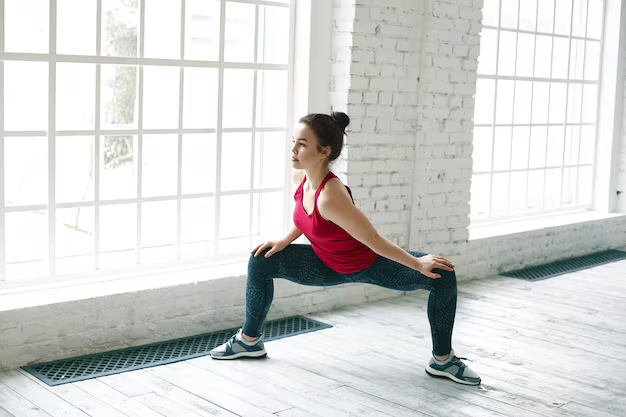
- Activates large muscle groups through asana: Poses like Chair Pose, Warrior II, and Plank build strength and endurance.
- Boosts metabolism naturally: Twisting poses and dynamic flows stimulate the abdominal organs and digestive fire (Agni).
- Reduces stress-induced overeating: Mindful breathing and relaxation lower cortisol levels, helping kids avoid emotional eating.
- Promotes joyful movement: Yoga nurtures a love for physical activity rather than making it feel like punishment.
When framed as “Yoga for Energy and Fun,” rather than “Yoga for Weight Loss,” it creates a positive association that supports health and body confidence from the outset.
Essential Preparations Before Teaching Yoga to Kids
Although yoga can be enjoyed anywhere, preparing a child-friendly environment enhances attention and safety.
- Set up a calm, open space: Use mats or soft flooring and ensure adequate ventilation.
- Keep classes short: For ages 5–10, keep sessions between 15–30 minutes.
- Incorporate storytelling: Linking poses to animals or nature engages imagination (“Let’s be tall trees in the forest!”).
- Encourage participation, not perfection: Focus on effort and joy rather than achieving the “right” pose.
- End with quiet time: Children love creative rest—guided imagery, soft music, or simple reflection.
With these principles, yoga becomes a playful, engaging practice rather than a lesson or performance.
Top Kundalini and Flexibility-Boosting Yoga Poses for Primary Classes
Let’s explore specific yoga positions that combine Kundalini-inspired techniques with flexibility and physical fitness development. Each pose listed below can be taught in fun thematic lessons or simple sequences.
1. Easy Pose (Sukhasana) – The Seat of Stillness
Purpose: Encourages breathing awareness and mental calm.
How to Teach:
Ask the children to sit cross-legged like a calm yogi. They can gently close their eyes, place hands on knees, and lengthen their backs tall like “mountain statues.” Have them breathe slowly through the nose while counting to three or four.
Benefits:
- Centering and grounding
- Teaches posture awareness
- Builds the foundation for meditation
Fun Twist: Invite them to “grow a rainbow” from their head to the sky with each slow breath.
2. Cat-Cow Pose (Marjaryasana–Bitilasana)
Purpose: Improves spinal flexibility and helps regulate breathing.
How to Teach:
From tabletop position, alternate between arching the spine like an angry cat and dropping the belly like a happy cow. Have the children make animal sounds for engagement.
Benefits:
- Strengthens core
- Improves spine mobility
- Encourages coordination
Kundalini Focus: Connect breath with movement — inhale in Cow, exhale in Cat — a signature Kundalini rhythmic flow.
3. Mountain Pose (Tadasana) – The Power of Stillness
Purpose: Builds balance and body awareness.
How to Teach:
Ask children to stand tall, feet together, arms at sides, eyes softly focused ahead. Imagine being a “tall mountain” rooted to the earth but reaching up toward sunlight.
Benefits:
- Strengthens posture
- Improves concentration and confidence
- Aligns the entire body
This pose is often used in Kundalini warm-ups for grounding.
4. Tree Pose (Vrikshasana) – Growing Strong Roots
Purpose: Encourages balance, stability, and concentration.
How to Teach:
Stand tall, lift one foot, and place it on the inner thigh or calf of the opposite leg. Bring palms together at the chest or above the head.
Benefits:
- Strengthens legs and ankles
- Builds mental focus
- Encourages patience
Playful Cue: Tell kids they are “trees in the wind,” gently swaying but never falling.
5. Butterfly Pose (Baddha Konasana)
Purpose: Stretches hips and inner thighs, promoting comfort and flexibility.
How to Teach:
Sit with feet together, holding ankles. Gently flap knees up and down like butterfly wings.
Benefits:
- Improves hip flexibility
- Reduces stiffness
- Soothing and calming before meditation
Use it as a transition into relaxation or breathwork.
6. Cobra Pose (Bhujangasana) – Rising Energy
Purpose: Opens the chest and strengthens the back.
How to Teach:
Have children lie on their bellies, place hands under shoulders, and lift the chest while looking up. Ask them to “become smiling cobras.”
Benefits:
- Strengthens the spine
- Expands lungs and improves breathing
- Stimulates digestion
This position is also found in many Kundalini kriyas as it activates spinal energy channels.
7. Warrior Pose II (Virabhadrasana II)
Purpose: Builds strength, stability, and confidence.
How to Teach:
Step one foot back, bend the front knee, stretch arms wide, and gaze over the front fingertips. Let them imagine being “brave warriors of peace.”
Benefits:
- Strengthens legs and arms
- Improves balance and focus
- Builds confidence
Weight-Loss Connection: A great pose for calorie burn and muscle toning.
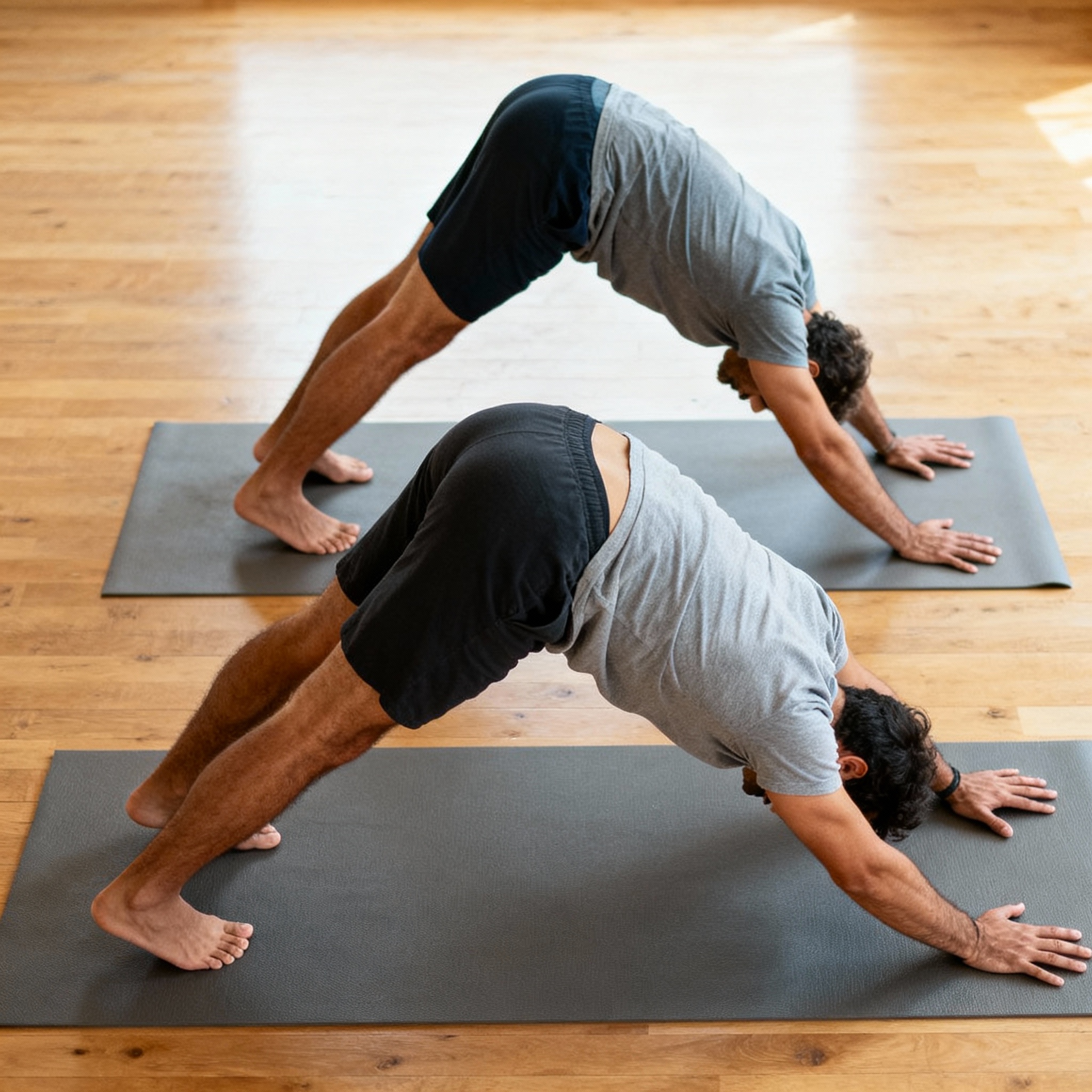
8. Downward-Facing Dog (Adho Mukha Svanasana)
Purpose: Full-body strengthener that lengthens the spine.
How to Teach:
From hands and knees, lift hips up and back. Encourage them to make an “inverted V shape.”
Benefits:
- Strengthens arms, shoulders, and legs
- Increases flexibility
- Relieves fatigue
Fun addition: Have them pretend they are puppies wagging tails!
9. Bridge Pose (Setu Bandhasana)
Purpose: Strengthens back, glutes, and hamstrings.
How to Teach:
Lie on back, knees bent, feet flat on the floor. Lift hips gently while keeping shoulders and head grounded.
Benefits:
- Tones lower body
- Improves flexibility of spine
- Encourages deep breathing
Kundalini Adaptation: Combine with rhythmic breathing to energize the nervous system.
10. Child’s Pose (Balasana)
Purpose: Calms the mind and releases tension.
How to Teach:
Sit on heels, rest chest on thighs, and stretch arms forward on the mat. Encourage students to “rest like a sleeping turtle.”
Benefits:
- Restorative and grounding
- Relieves fatigue and stress
- Encourages inward awareness
Often used as a closing or restful transition pose.
11. Boat Pose (Navasana)
Purpose: Builds core strength and concentration.
How to Teach:
Sit on the floor, lift legs and torso to create a “V” shape. Tell them they’re “sailing through calm waters.”
Benefits:
- Strengthens abdominals
- Improves balance
- Stimulates digestion
For weight management, this is an energizing pose that works multiple muscle groups simultaneously.
12. Kundalini Spinal Twist (Seated Twist)
Purpose: Awakens energy along the spine.
How to Teach:
Sit cross-legged with a straight spine. Hold shoulders lightly, inhale, and twist gently to the left; exhale, twist to the right, in rhythm.
Benefits:
- Improves flexibility and spinal movement
- Energizes body
- Promotes digestion
A perfect example of Kundalini’s breath–movement synergy.
13. Frog Pose (Mandukasana Variation)
Purpose: A classic dynamic Kundalini Yoga exercise that energizes and tones legs.
How to Teach:
Stand on toes, knees open, fingertips on the ground in front. Inhale up, exhale down in a squat. Repeat rhythmically.
Benefits:
- Strengthens legs and core
- Improves stamina
- Stimulates digestion and metabolism
This pose is often used in Kundalini kriyas for vitality and hormonal balance.
14. Sufi Grind (Seated Hip Circles)
Purpose: Awakens Kundalini energy and loosens the spine.
How to Teach:
Sitting cross-legged, place hands on knees and begin making slow circular movements with your torso.
Benefits:
- Releases lower back tension
- Improves abdominal circulation
- Creates a meditative state through rhythmic motion
These circular movements can be set to drum beats or chants to keep young learners engaged.
15. Candle Pose (Sarvangasana Variation for Kids)
Purpose: Strengthens shoulders and abdomen while improving circulation.
How to Teach:
Children lie on their backs and lift legs upward, supported by hands at the hips. Encourage kicking the feet as if “lighting candles with their toes.”
Benefits:
- Stimulates metabolism
- Enhances focus and body coordination
- Encourages playful inversion
Note: Supervision is essential; skip for very young ranks (below 6 years).
Breathing Exercises (Pranayama) for Children
Pranayama, the heart of Kundalini Yoga, can be taught in fun and creative ways to children. Instead of teaching complex breath retention, focus on visualization and rhythm.
Examples
- Bumblebee Breath (Bhramari Pranayama): Hum like a bee to calm the mind and improve focus.
- Balloon Breath: Imagine inflating a big balloon in the belly with each inhale.
- Lion’s Breath: Stick out the tongue, exhale with a roar to release frustration.
- 4-4 Breath: Inhale for four counts, exhale for four counts — a great beginner-friendly breathing rhythm.
These exercises subtly introduce mindfulness and stress regulation.
Integrating Yoga for Weight Loss in a Child-Friendly Way
Incorporating yoga for weight loss into primary sessions must be both lighthearted and health-driven. Here’s how to do it ethically and safely:
1. Focus on Energy, Not Appearance
Instead of “losing weight,” discuss how yoga “gives energy” or “helps us feel light and strong.”
2. Use Dynamic Yoga Sequences
Kids enjoy flowing movements. Combine poses like Chair, Down Dog, and Mountain into short flows or “yoga adventures.”
3. Include Play-Based Challenges
Turn asanas into games: balance like birds, stretch like cats, or breathe like dragons.
4. Teach Mindful Eating
Children can learn simple awareness exercises—like eating slowly or identifying flavors—to support healthy habits.
5. Keep Feedback Positive
Encourage, don’t compare. Celebrate balance, participation, and playfulness rather than body image.
Kundalini-Inspired Yoga Routine for Primary Students (Sample 20-Minute Sequence)
Here’s a practical, adaptable routine for school sessions or beginner classes.
- Welcome and Centering (2 minutes)
Sit in Easy Pose. Gentle Shoulder Rolls with slow breathing. - Kundalini Spinal Warm-Up (3 minutes)
Sufi Grind (30 sec clockwise, 30 sec anti-clockwise)
Cat-Cow (5–8 slow rounds) - Dynamic Energizing Flow (8 minutes)
Frog Pose – 30 seconds × 3 rounds
Warrior II Pose with rhythmic breath
Downward-Facing Dog → Mountain Pose → Tree Pose sequence - Cooling & Flexibility Phase (4 minutes)
Butterfly Pose
Bridge Pose
Cobra Stretch - Breathing & Relaxation (3 minutes)
Bumblebee Breath (1 min)
Rest in Child’s Pose (2 min) - Closing Affirmation
“I am strong, calm, and full of light.”
Adapting Yoga Classes for Different Age Groups
Ages 5–7
- Short sequences with stories and visuals
- Animal poses and breathing games
- Focus on fun, rhythm, and body awareness
Ages 8–10
- Introduce pose names, light alignment cues
- Encourage independent holding of poses
- Blend flexibility, focus, and teamwork games
Ages 10–12
- Add challenge and discipline with flows
- Integrate short breathing or mindfulness meditations
- Discuss energy, respect, gratitude, and balance
These progressive adaptations ensure the practice grows with the child’s maturity.
Safety Tips for Yoga with Children
Safety is essential when guiding developing bodies:
- Avoid forcing flexibility; never push into pain.
- Use soft mats and non-slip surfaces.
- Encourage warm-ups before deep stretches.
- Modify inversions and backbends for age appropriateness.
- Maintain hydration and rest periods.
- Always model poses clearly before children attempt them.
Teachers should create an encouraging environment where children feel safe exploring movement.
Psychological and Emotional Benefits in School Settings
Yoga’s reach extends well beyond the physical. Emotional intelligence and classroom harmony often improve through consistent practice.
Highlights
- Social bonding: Partner yoga fosters cooperation and trust.
- Emotional literacy: Breathing exercises support self-regulation and empathy.
- Academic performance: Improved concentration and memory.
- Reduced anxiety: Relaxation techniques reduce nervousness before exams or performances.
Educators worldwide report that yoga transforms restlessness into focus, competition into collaboration, and anxiety into calm confidence.
Kundalini Yoga and Mindfulness in Modern Education
Many schools globally integrate mindful movement programs to balance the growing academic demands on children. Kundalini-inspired teaching stands out because it integrates breathing, rhythm, and self-expression, making it ideal for classroom and home-based learning.
For teachers, three guiding principles can transform simple routines into powerful life lessons:
- Breath before movement – Each pose begins with awareness.
- Joy before perfection – Engagement matters more than alignment.
- Calm before conclusion – Always close with stillness and gratitude.
These foundations form the spirit of Kundalini Yoga adapted for children: inner strength through joyful awareness.
Teaching Tips for Instructors
If you’re designing yoga sessions for a primary setting, keep these teaching tools in mind:
- Use storytelling themes (like “A trip to the jungle” or “Journey through the stars”) with poses representing animals, trees, or heroes.
- Include music and rhythm — playful drumbeats, gentle chants, or humming can structure timing naturally.
- Introduce mandala art or short reflections after sessions to enhance creativity.
- Maintain consistency — short daily sessions are more effective than long weekly ones.
- Reinforce gratitude and mindfulness — finish with positive affirmations.
Small, mindful rituals like these shape children’s understanding of yoga as a joyful inner journey rather than just physical activity.
Integrating Parents and Teachers in the Practice
Children mirror adults. When parents and educators practice even briefly alongside them, motivation skyrockets.
- Home practice ideas: Encourage families to share evening breathing or morning stretches together.
- Classroom breaks: Teachers can insert 3-minute “stretch moments” between lessons.
- School events: Organize yoga exhibitions or community classes that celebrate mindful movement.
Yoga thus becomes a shared value system—one that nurtures community mindfulness and wellbeing.
Final Relaxation: Cultivating Stillness
Every yoga session, no matter how simple, should end with relaxation. For children, this could be guided visualization.