The world of yoga is ever-evolving, and one of its most graceful innovations is aerial yoga — a practice that beautifully blends traditional yoga postures with elements of acrobatics, Pilates, and dance. Suspended in the air with the support of a soft silk hammock, practitioners experience a whole new level of freedom, strength, and flexibility.
If you’ve ever watched an aerial yogi effortlessly float into inversion or spin gracefully between poses, you’ve likely felt a mix of awe and curiosity. This guide reveals what aerial yoga truly is, its advantages, essential poses, safety tips, and how you can begin this transformative journey.
What Is Aerial Yoga?
Aerial yoga, sometimes called antigravity yoga, incorporates a hammock (made of durable silk or polyester) that hangs from the ceiling. This hammock supports your body weight, allowing you to perform traditional yoga postures — from inversions to backbends — with less strain on the spine and joints.
Unlike traditional mat yoga, aerial yoga takes advantage of gravity to help decompress the spine and deepen stretches, making it a therapeutic yet adventurous approach to wellness.
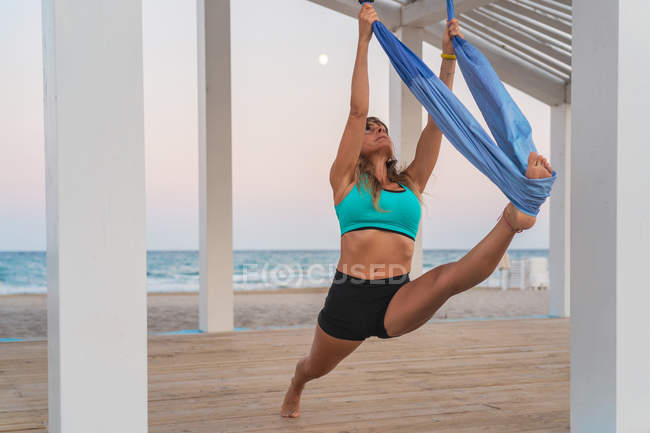
Origins of Aerial Yoga
While yoga’s roots trace back thousands of years to ancient India, is a modern innovation developed in the early 1990s. Christopher Harrison, a former Broadway performer and gymnast, is often credited with popularizing AntiGravity® Fitness, a form of aerial yoga that fuses yoga, acrobatics, and dance.
Over time, studios worldwide adopted the concept, adding their flair. Today, aerial yoga sits at the intersection of artistry and fitness — welcoming yogis of all levels.
Equipment Needed for Aerial Yoga
Before exploring poses, it’s essential to understand the primary tools and setup involved in aerial yoga.
- Aerial Hammock or Swing: Made from sturdy, soft fabric designed to hold up to 1,000 pounds or more. It supports full inversions and complex yoga postures safely.
- Carabiners and Rigging Hardware: These attach the hammock to secure ceiling points. They must be weight-tested and professionally installed.
- Ceiling Mount or Rig Frame: Either permanent ceiling hooks or a portable freestanding frame.
- Yoga Mat: Still useful for grounding, padding, and transitions between hammock and floor exercises.
These components create the supportive environment that enables aerial yoga practitioners to gracefully explore yoga poses names like inversion, plank, and pigeon pose from a new perspective – midair.
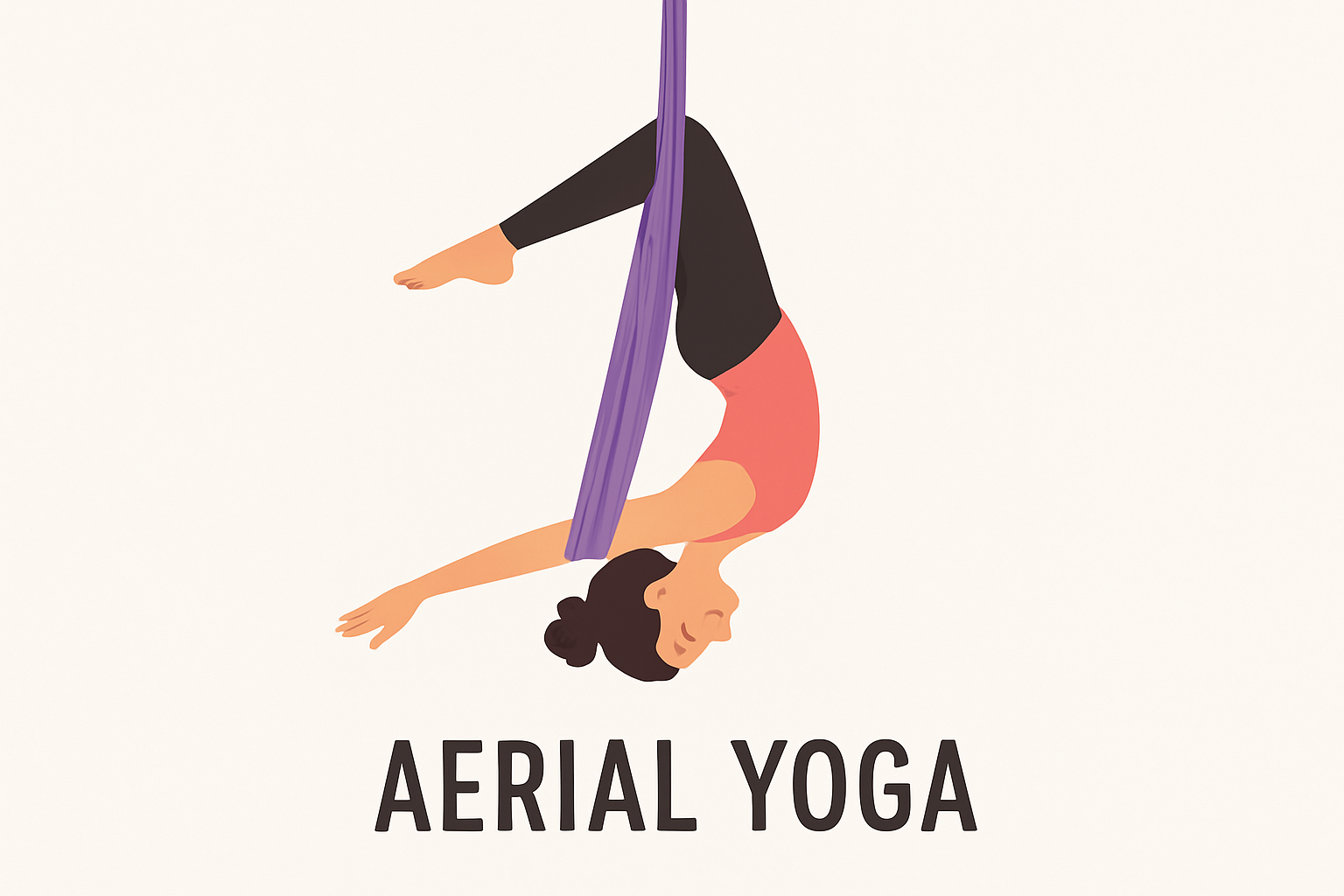
Key Benefits of Aerial Yoga
The allure of aerial yoga isn’t just aesthetic. The physical and mental benefits of practicing suspended yoga are profound.
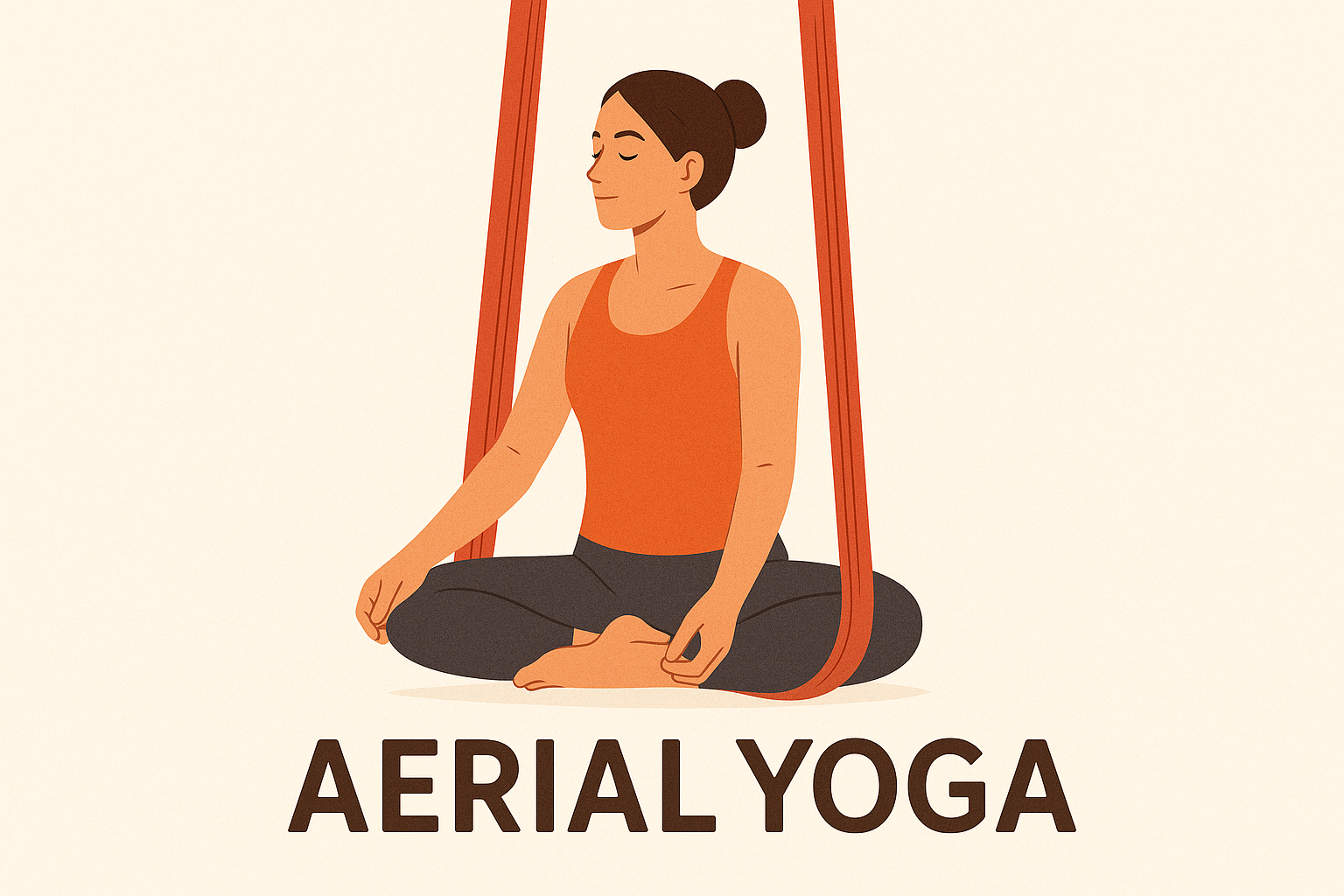
1. Strengthens the Entire Body
Balancing your body in a hammock activates stabilizing muscles throughout the core, shoulders, and legs. Even simple yoga postures like plank or downward dog become intensified when performed while partially suspended.
2. Improves Flexibility
The fabric supports deep stretches while freeing the joints from unnecessary compression. Inversions and backbends feel more accessible and safer in the hammock.
3. Enhances Spinal Health
Aerial yoga’s inversions gently decompress the spine, relieving pressure from vertebrae. This can alleviate back pain and promote better posture.
4. Boosts Mental Clarity and Confidence
Being airborne demands focus, balance, and presence. The meditative quality of aerial yoga nurtures mindfulness, while mastering new yoga poses builds a powerful sense of accomplishment.
5. Reduces Impact on Joints
Because gravity is redistributed through the hammock, aerial yoga provides all the benefits of strength training and stretching without heavy impact on knees or wrists.
6. Stimulates Circulation and Lymphatic Flow
Inverted poses improve blood flow to the brain, enhancing energy levels and detoxification through the lymphatic system.
How Aerial Yoga Differs from Traditional Yoga
While incorporates conventional yoga postures, it transforms the practice in several ways:
| Feature | Traditional Yoga | Aerial Yoga |
|---|---|---|
| Medium | Ground-based (mat) | Suspended hammock |
| Support | Body weight fully supported by ground | Hammock supports partial/full body weight |
| Impact on Joints | Moderate depending on posture | Minimal due to suspension |
| Focus | Flexibility, strength, and mindfulness | Same, plus balance and spatial awareness |
| Engagement | Static poses | Dynamic movement and inversions |
This dynamic variation makes aerial yoga an invigorating addition for seasoned yogis or beginners seeking to improve their flexibility and body awareness.
Popular Aerial Yoga Poses Names and Postures
Learning some of the most common yoga poses names in aerial yoga will help you understand how this practice translates classic floor-based postures into elevated experiences.
1. Aerial Mountain Pose (Tadasana)
Just as in mat yoga, Tadasana establishes alignment and breath awareness. Here, you stand tall holding the hammock, feeling its gentle resistance helping to lengthen the spine.
2. Aerial Plank Pose
Suspending your feet or thighs in the hammock, you maintain a horizontal plank with hands on the ground. This variation intensifies core engagement while protecting joints.
3. Inverted Bow Pose (Dhanurasana)
One of the most stunning yoga postures, this pose lets you bend backward while the hammock supports your hips and chest. The spine arches comfortably as shoulders open and energy flows freely.
4. Aerial Pigeon Pose (Eka Pada Rajakapotasana)
Using the hammock to cradle one leg, the practitioner stretches deeply into the hip flexors while keeping the spine elongated. It’s ideal for releasing tight muscles.
5. Aerial Inversion (Upside Down Pose)
This iconic yoga pose name is synonymous with aerial yoga. Supported by your pelvic region, you gently hang upside down, decompressing the spine and improving circulation.
6. Floating Bound Angle Pose (Baddha Konasana)
Seated in the hammock, bring soles of the feet together. This pose soothes the nervous system while increasing flexibility in the inner thighs.
7. Aerial Savasana (Final Relaxation)
Perhaps the most heavenly of all aerial experiences, you cocoon yourself in the hammock at the end of the session — gently swaying as you surrender to stillness.
How to Practice Aerial Yoga Safely
Safety is paramount in aerial yoga. The combination of inversions and height demands mindful preparation.
- Check Equipment: Ensure ceiling mounts, carabiners, and fabrics are weight-rated and regularly inspected.
- Warm-Up First: Always start with gentle stretches and breathing before lifting off.
- Listen to Your Body: If dizziness or pressure occurs during inversions, slowly return upright.
- Avoid Overstretching: Hammocks can tempt you to push flexibility beyond safe limits. Move progressively.
- Work with Certified Instructors: Beginners should always learn under professional guidance, especially during inversions.
- Medical Conditions: Aerial yoga may not be suitable for individuals with glaucoma, vertigo, recent surgery, or hypertension. Consult a professional if unsure.
Aerial Yoga for Beginners: Where to Start
Starting aerial yoga can seem intimidating, but with proper guidance, it becomes exciting and empowering.
Step 1: Find a Qualified Studio
Look for instructors certified in aerial yoga or Antigravity® Fitness. Qualified studios will have strong rigging and safety protocols.
Step 2: Wear the Right Clothing
Opt for fitted activewear with sleeves and leggings to avoid fabric burns. Avoid zippers or jewelry that could damage the hammock.
Step 3: Master Foundational Yoga Postures
Even before practicing aerial inversions, build comfort with common ground-based yoga poses names such as Downward Dog, Warrior II, and Cat-Cow.
Step 4: Embrace the Learning Curve
The hammock challenges coordination and balance initially. With consistency, you’ll gain aerial control and flow between poses effortlessly.
The Mind-Body Connection in Aerial Yoga
Just like traditional yoga, aerial yoga connects physical movement with breath and awareness. The sensation of hanging weightlessly promotes mind-body harmony, evoking a childlike joy and trust in oneself.
Practitioners often describe feeling liberated after a session — both physically light and mentally clear. This sense of elevation is not just literal but deeply emotional. As you float, muscles engage mindfully, releasing tension stored over time.
thus becomes more than physical exercise; it’s a moving meditation that blends mindfulness, creativity, and play.
Aerial Yoga vs. Other Forms of Yoga
| Yoga Type | Unique Focus | Ideal For |
|---|---|---|
| Aerial Yoga | Combines acrobatics, strength, and decompression | Those seeking low-impact fun workouts |
| Hatha Yoga | Foundational poses and breathing | Beginners focusing on basics |
| Vinyasa Yoga | Fluid transition between poses | Dynamic movement lovers |
| Kundalini Yoga | Spiritual awakening and breath-driven energy | Those seeking meditative transformation |
| Restorative Yoga | Deep relaxation with props | Stress relief and recovery |
| Yin Yoga | Long-held, passive stretches | Flexibility and mindfulness seekers |
Among these, stands out for its unique use of gravity — transforming the way your body experiences alignment, focus, and flow.
The Science Behind Aerial Yoga
Physiologically, aerial yoga engages multiple systems at once. Research from fitness and wellness studies indicates that suspended activities stimulate proprioception — the body’s sense of spatial orientation. That’s why balance, agility, and coordination improve rapidly through practice.
Moreover, studies link inverted poses with enhanced venous return, promoting brain oxygenation and calmness. When combined with breathing control, can significantly reduce stress cortisol levels while elevating endorphins.
The dynamic, three-dimensional movement also trains the vestibular system in the inner ear, improving equilibrium and overall body confidence.
Emotional and Psychological Benefits
Beyond the physical realm, aerial yoga taps deeply into emotions. The act of letting go and trusting the hammock symbolizes surrender — a core concept in yoga philosophy.
Many practitioners report the following mental-emotional gains:
- Increased confidence through mastering new yoga postures
- Heightened self-awareness and focus
- Reduced anxiety and fear of falling
- Renewed creativity and playfulness
- Deep emotional release during aerial Savasana
These effects mirror the holistic philosophy of yoga — uniting body, mind, and spirit in equilibrium.
Advanced Aerial Yoga Postures
Once you’ve mastered foundational techniques, you can progress to more graceful and challenging yoga poses names used in aerial sequences.
1. Aerial Scorpion Pose
Balancing upside down, you bend knees toward your head, resembling a scorpion tail. This requires strong back and shoulder mobility.
2. Aerial Flying Split
Suspended in a deep split, this visually stunning posture enhances hip flexibility and leg strength.
3. Full Aerial Wheel Pose
Supported by the hammock under your back, this deep backbend strengthens the spine and core while expanding chest capacity.
4. Aerial Shoulder Stand
A gravity-assisted inversion that boosts blood flow to the brain and strengthens neck alignment without pressure.
These advanced poses should always be practiced under professional supervision to avoid strain.
Building a Home Aerial Yoga Space
As popularity grows, many enthusiasts are bringing hammocks home. However, safety and setup are critical.
Guidelines:
- Professional Installation: Hammocks must attach to ceiling joists, not drywall.
- Choose Certified Equipment: Look for aerial silks rated above your body weight capacity (minimum 1000 lbs).
- Ceiling Height: Ideally, 8–10 feet clearance from the floor.
- Location: Ensure open space without sharp corners or overhead fans.
Also, consider soft flooring or mats beneath your hammock for backup protection during inversions.
Breathing and Meditation in Aerial Yoga
Breath awareness, or pranayama, remains the cornerstone of yoga — or otherwise. Because you’re suspended, breathing deepens naturally as lungs expand freely, uncompressed by gravity.
Common techniques:
- Ujjayi Breath: Oceanic breath that builds internal heat.
- Nadi Shodhana: Alternate nostril breathing to balance hemispheres.
- Deep Diaphragmatic Breathing: Ideal during aerial Savasana to calm the mind.
During final relaxation, many practitioners use the hammock as a floating meditation pod — swaying gently as soothing music and rhythmic breath invite serenity.
How Aerial Yoga Transforms Your Body
Regular practice produces visible and invisible transformations.
- Core Strength: Engaged continuously for balance.
- Postural Alignment: Improved through decompression and spinal mobility.
- Fat-Burning: The dynamic flow aids weight management.
- Graceful Movement: Increased balance and kinesthetic intelligence.
In just a few weeks, you’ll feel greater lightness, suppleness, and confidence in both aerial and ground yoga postures.
Combining Aerial Yoga with Traditional Yoga
Many practitioners blend mat-based yoga with aerial practice for a complete regimen. Here’s how you can integrate both:
- Begin each session grounded with sun salutations to warm up.
- Move into suspension for strength and flexibility work.
- End back on the mat for meditation and Savasana.
This hybrid method leverages both grounding stability and aerial expansion — giving you the best of both worlds.
Aerial Yoga for Weight Loss
One of most sought-after benefits is its impact on weight loss. The sequences often combine cardiovascular effort, strength training, and flexibility. A 50-minute aerial yoga session can burn between 320–400 calories, depending on intensity.
Core engagement during suspended planks and inversions ignites metabolism while improving muscle tone. When paired with mindful eating and consistent practice, becomes a sustainable fitness routine — sculpting the body holistically.
Common Myths About Aerial Yoga
- “You need to be flexible to start.”
False. The hammock helps you become flexible safely. - “It’s only for performers or gymnasts.”
Anyone can do it with proper guidance. - “It’s dangerous.”
Certified instructors and tested equipment make aerial yoga highly safe. - “It’s just a fitness trend.”
Aerial yoga integrates timeless yoga philosophy with modern innovation, proving both lasting and meaningful.
Aerial Yoga and Spiritual Connection
Though modern in form, aerial yoga embraces the spiritual essence of yoga — union. The act of floating between sky and earth symbolizes balance between worldly grounding and higher consciousness.
Suspension encourages surrender — a reminder to release attachment and trust the flow of life. This spiritual symbolism makes every aerial session not just fitness, but a ritual of inner connection and freedom.
Frequently Asked Questions About Aerial Yoga
1. Can beginners try aerial yoga?
Yes. Most studios offer introductory classes emphasizing safety and gradual progression.
2. What do I wear to an aerial yoga class?
Form-fitting clothes that cover the armpits and knees to minimize friction and protect the skin.
3. How often should I practice?
Two to three times weekly offers great results. Allow recovery time between sessions.
4. Is aerial yoga suitable for seniors?
With medical clearance, restorative aerial variations can benefit mobility and spinal decompression.
5. Can aerial yoga replace my regular workouts?
It can complement them beautifully by enhancing core stability, flexibility, and balance
6. Do I need yoga experience to start aerial yoga?
No previous yoga experience is required. Beginners are welcome, and classes are designed to introduce fundamental yoga postures safely using the hammock for support.
7. Is aerial yoga safe?
Yes, it is safe when practiced under the guidance of a certified instructor using professional-grade equipment. Always ensure that hammocks and rigging are inspected regularly and installed properly.
8. What are the benefits of aerial yoga?
Regular aerial yoga practice enhances flexibility, strengthens the core, decompresses the spine, and improves balance. It also reduces stress and promotes mindfulness.
9. What should I wear to an aerial yoga class?
Wear comfortable, fitted clothing that covers your knees, underarms, and waist to avoid skin irritation from the fabric. Remove jewelry and avoid clothing with zippers that could damage the silk.
10. Can I practice aerial yoga if I’m not flexible or strong?
Absolutely. The hammock supports your body and assists in building both strength and flexibility progressively. Over time, flexibility and control naturally improve.
11. What is the weight limit for the hammock?
Most professional aerial hammocks are rated to hold at least 400–450 kg, far exceeding average body weight. However, some studios may set participant limits (typically around 200 lbs) for safety reasons.
12. Are there any health conditions that prevent participation?
Individuals with glaucoma, high or low blood pressure, recent surgeries, pregnancy (beyond the first trimester), heart conditions, or vertigo should consult a doctor before attempting aerial yoga.
13. Can I install an aerial yoga hammock at home?
Yes, but it should be professionally rigged. The ceiling setup must anchor into solid beams or joists, never drywall. Portable aerial frames are also available for safe home practice.
14. What is the minimum age for aerial yoga?
Kids as young as six can join youth-oriented aerial classes, while standard adult sessions often require participants to be at least 16 years old.
15. How often should I practice aerial yoga?
For visible strength, balance, and flexibility improvements, aim for 2–3 sessions per week. This frequency also allows recovery and body adaptation.
16. I’m afraid of heights — can I still do aerial yoga?
Yes. Most hammocks hang just a few feet above the floor. Instructors adjust the height and provide support to help you feel grounded and safe throughout class.
17. Is aerial yoga good for back pain?
Yes, the decompression effect of inverted and supported poses can ease spinal tension, release tight muscles, and improve posture. It’s one of the practice’s most therapeutic benefits.
18. How long is a typical aerial yoga class?
Classes usually last between 60 and 75 minutes, including warm-up, main sequences, inversions, and a calm, restorative Savasana in the hammock.
19. Do men practice aerial yoga too?
Definitely! Aerial yoga is for everyone — regardless of gender, body type, or fitness background. It’s an opportunity to build strength, flexibility, and balance creatively.