In a world moving faster than ever before, where digital screens dominate our lives, Hatha Yoga emerges as a sanctuary of stillness and profound awareness. Rooted in ancient yogic traditions, Hatha Yoga is more than physical exercise; it is a holistic discipline that unites the body, mind, and spirit. In 2025, as wellness culture continues to evolve, Hatha Yoga stands as a timeless practice offering physical health, emotional stability, and spiritual harmony.
Understanding the Essence of Hatha Yoga
The word “Hatha” originates from two Sanskrit terms — Ha meaning “sun” and Tha meaning “moon.” Symbolically, Hatha Yoga seeks to balance opposing energies within the body — masculine and feminine, active and passive, solar and lunar. It serves as the foundation for most modern yoga styles, emphasizing physical postures (asanas), controlled breathing (pranayama), and meditative awareness.
Hatha Yoga was codified in the “Hatha Yoga Pradipika,” written by Swami Swatmarama in the 15th century, but its roots trace back thousands of years to ancient India. The goal is to prepare the body and mind for deeper states of meditation, creating a bridge between the physical and spiritual dimensions of existence.
Why Hatha Yoga Is Relevant in 2025
As lifestyles have become increasingly sedentary, stress, anxiety, and lifestyle-related disorders have surged. Hatha Yoga’s relevance lies in its ability to counterbalance the chaos of modern living. In 2025, the resurgence of slow living and mindful movement practices has made Hatha Yoga an ideal choice for cultivating sustainable wellness habits.
Key reasons for its growing popularity include:
- It suits beginners and seasoned practitioners alike.
- It promotes slow, conscious movement over rapid exercise.
- It integrates breath awareness and mindfulness, aligning well with holistic living trends.
- It requires minimal equipment and can be practiced anywhere.
Philosophical Foundations of Hatha Yoga
At its core, Hatha Yoga embodies the philosophy of unity — union of mind and body, effort and surrender, action and stillness. It is grounded in the eight limbs of yoga as outlined by Sage Patanjali, though Hatha traditionally emphasizes the physical and energetic aspects.
The fundamental principles include:
- Asana (Posture): Physical postures that strengthen and open the body.
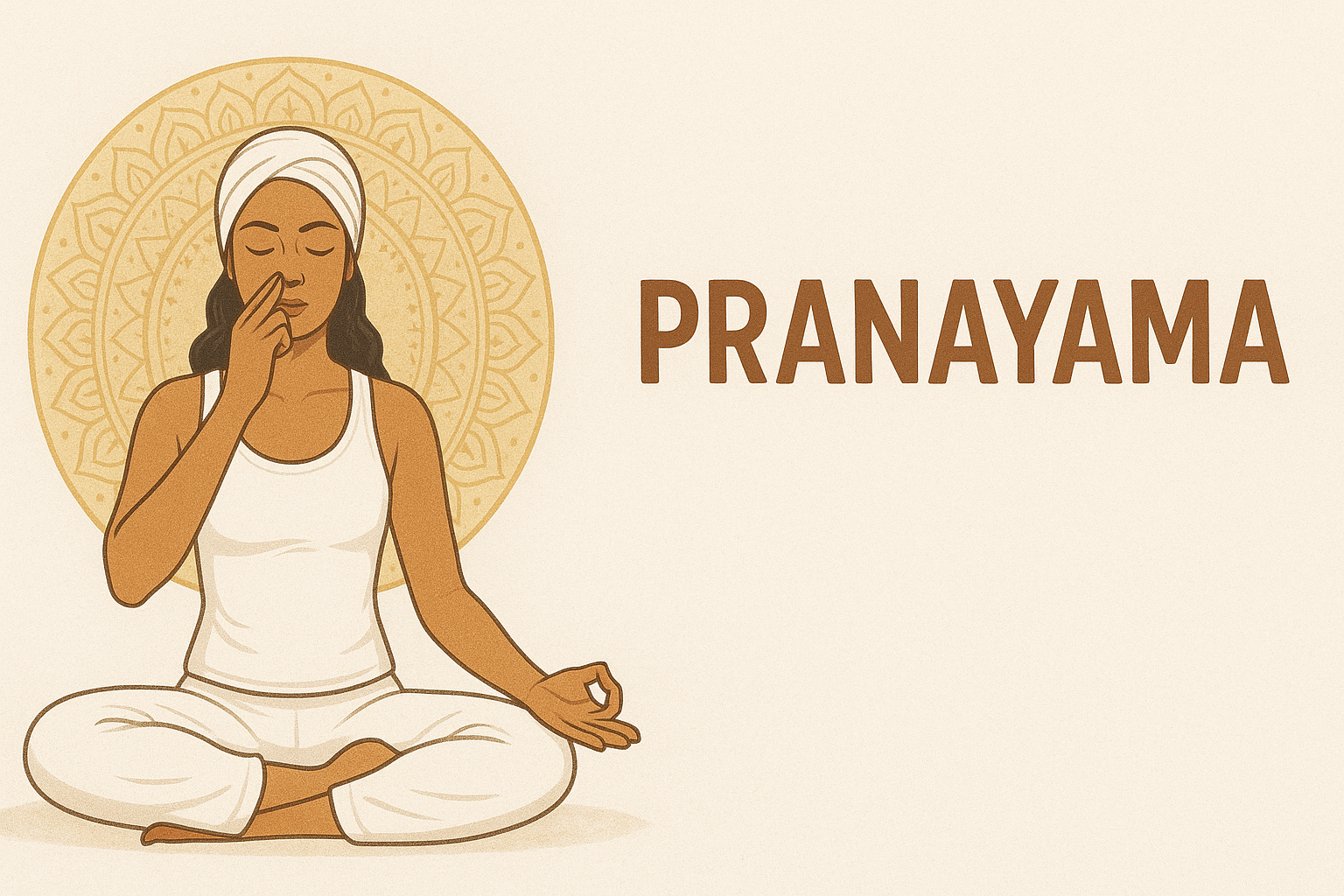
- Pranayama (Breath Control): Regulation of breath to direct life force (prana).
- Bandhas (Energy Locks): Techniques to channel and control energy within the body.
- Mudras (Gestures): Symbolic hand and body positions used to influence energy flow.
- Dhyana (Meditation): The practice of stilling the mind to cultivate awareness.
- Shatkarma (Cleansing Techniques): Six purification practices to purify the body and mind.
The Science Behind Hatha Yoga
Modern science continues to validate what ancient yogis knew intuitively — that the mind and body are intricately connected. Research studies conducted between 2020 and 2025 have demonstrated measurable benefits of consistent Hatha Yoga practice:
- Improved flexibility and joint health: Gentle stretching reduces stiffness and enhances range of motion.
- Better posture and spine alignment: Regular practice alleviates back pain and muscular imbalances.
- Enhanced cardiovascular function: Slow sequences combined with pranayama improve heart rate variability and oxygen efficiency.
- Reduced stress and anxiety: Controlled breathing activates the parasympathetic nervous system, lowering cortisol levels.
- Improved mental clarity: Meditation and mindfulness segments promote focus and cognitive balance.
- Boosted immunity: Cleansing techniques and pranayama improve respiratory and lymphatic systems.
Key Principles of Hatha Yoga Practice
- Comfort and Stability – Asanas should be held with comfort and steadiness. Pain is avoided to prevent disrupting energy flow.
- Breath Awareness – Each movement synchronizes with breath to deepen awareness.
- Mindful Progression – Gradual progress ensures longevity in practice rather than overexertion.
- Consistency Over Intensity – Daily, moderate practice is more beneficial than occasional intensive sessions.
- Balance of Effort and Surrender – Practitioners learn to find equilibrium between physical exertion and relaxation.
Core Hatha Yoga Asanas
A traditional Hatha Yoga session includes a balanced sequence of postures that energize, stabilize, and soothe the body. Below are key asanas commonly practiced:
- Tadasana (Mountain Pose): Improves posture and grounding.
- Vrikshasana (Tree Pose): Enhances balance and focus.
- Adho Mukha Svanasana (Downward-Facing Dog): Strengthens shoulders and lengthens the spine.
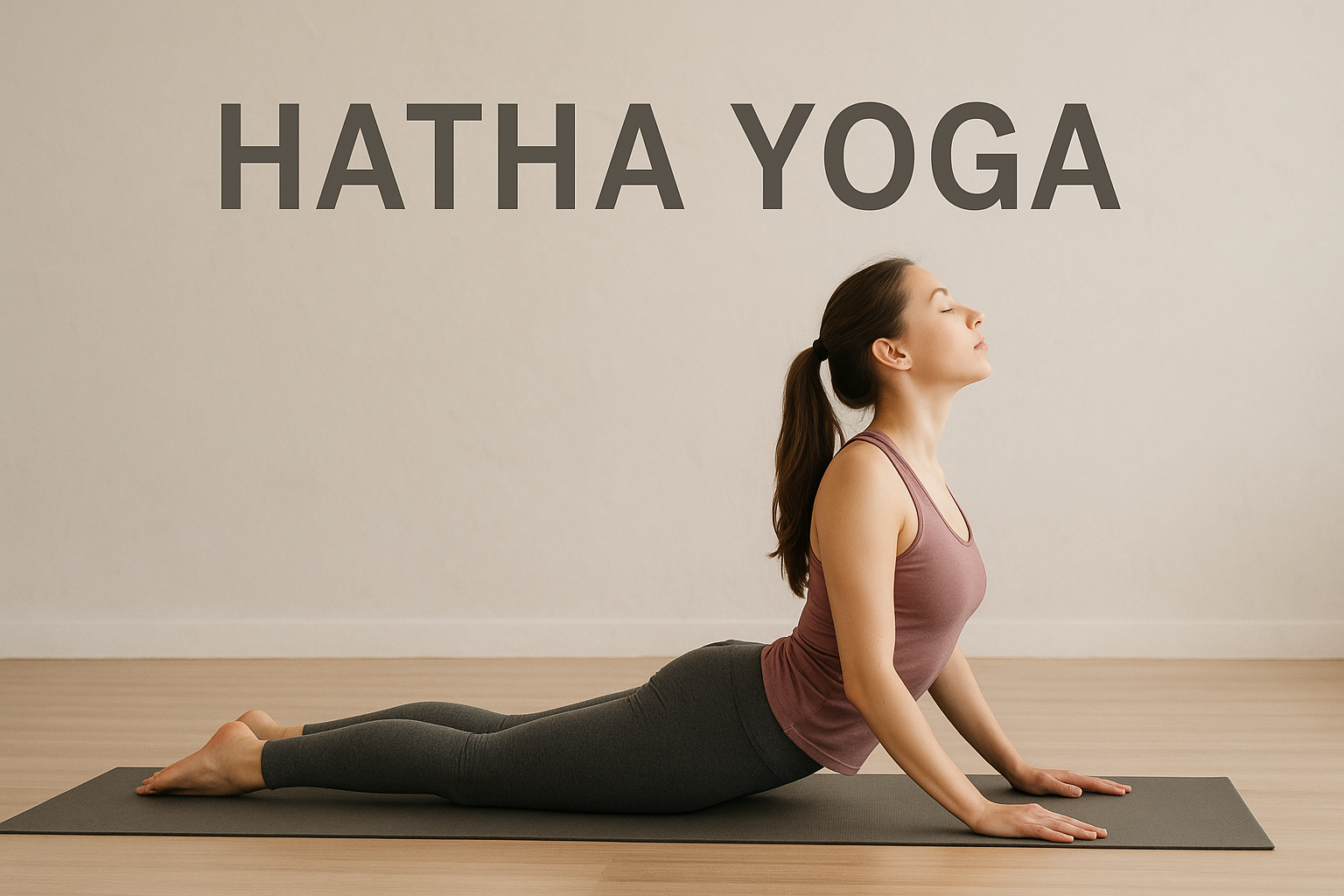
- Bhujangasana (Cobra Pose): Opens the chest and strengthens the back muscles.
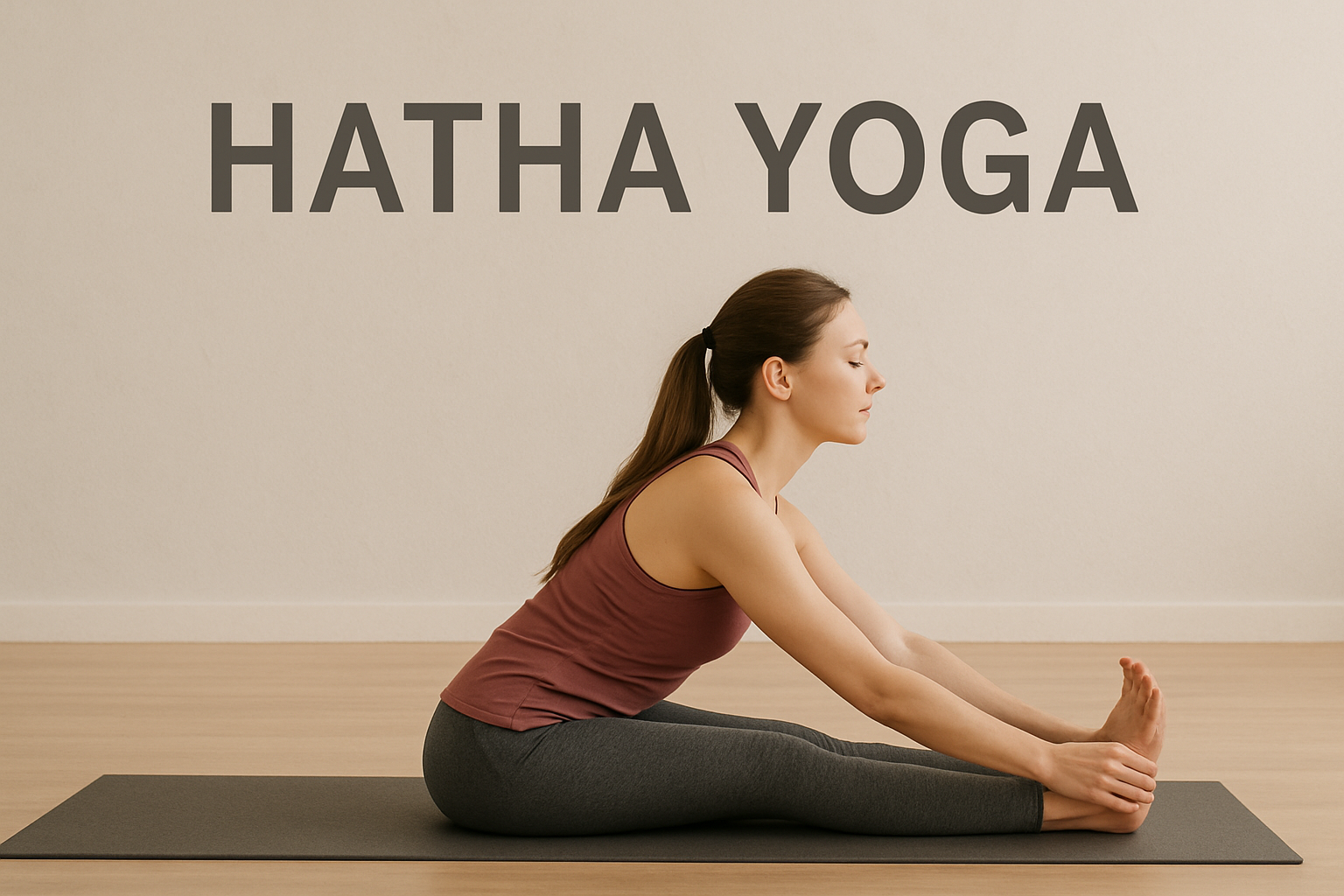
- Paschimottanasana (Seated Forward Bend): Calms the mind and stretches hamstrings.
- Trikonasana (Triangle Pose): Improves flexibility and digestion.
- Setu Bandhasana (Bridge Pose): Strengthens the glutes and opens the heart.
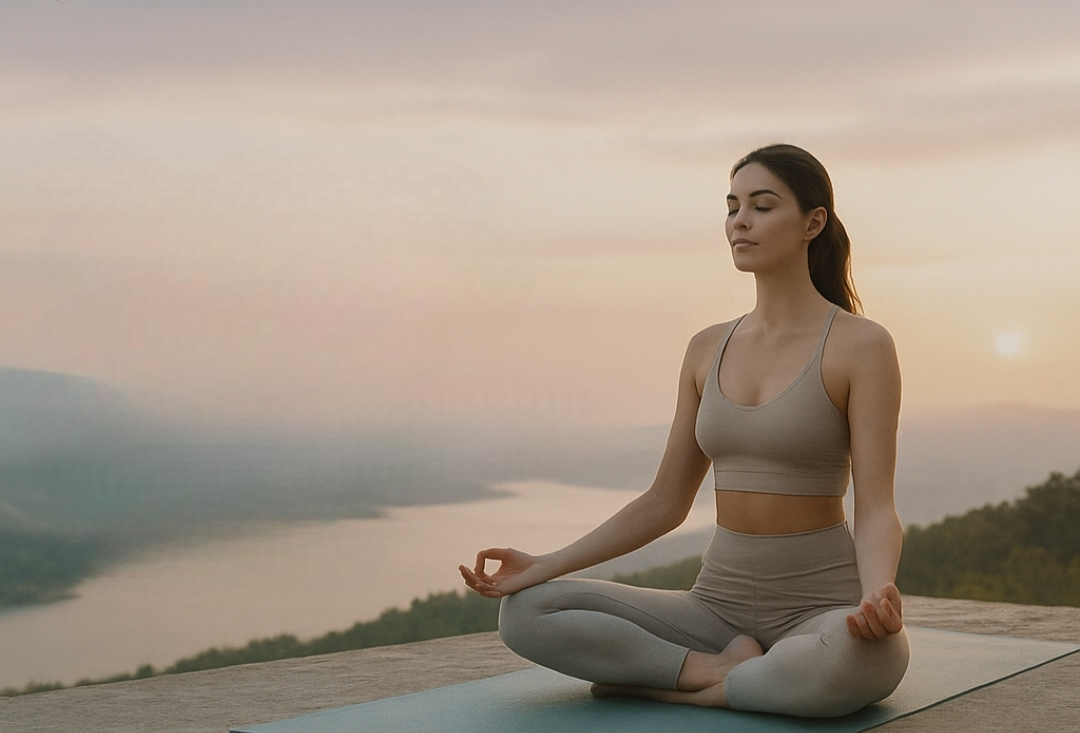
- Padmasana (Lotus Pose): Traditional meditative posture promoting stability and calm.
Pranayama Practices in Hatha Yoga
Breath regulates life energy. Hatha Yoga integrates different pranayama techniques to harmonize and vitalize the system:
- Anulom Vilom (Alternate Nostril Breathing): Balances both brain hemispheres and calms the mind.
- Bhramari (Humming Bee Breath): Reduces anxiety and mental agitation.
- Kapalbhati (Skull Shining Breathing): Detoxifies and energizes the body.
- Ujjayi (Victorious Breath): Generates internal heat and enhances focus.
- Sheetali (Cooling Breath): Calms the nervous system and reduces stress.
Hatha Yoga for Balance and Strength
Hatha Yoga’s slow, deliberate nature allows practitioners to cultivate both physical strength and mental equilibrium. Each asana demands stability, patience, and engaged muscles. Over time, it builds endurance and tones the entire body — particularly core, hips, legs, and back.
Physical balance translates to emotional balance. As one learns to stand firm in poses like Tree or Warrior, internal steadiness begins to reflect in how one reacts to life’s challenges.
Developing Inner Harmony Through Hatha Yoga
Inner harmony is achieved when body and mind operate in cohesion. Through mindful breathing and meditative focus, one develops heightened self-awareness. The rhythmic flow of movement and breath dissolves distractions, leading to clarity, calmness, and self-acceptance.
Regular practice nurtures emotional intelligence, improves patience, and enhances the ability to remain centered during stress. Hatha Yoga thus becomes a spiritual anchor — a compass guiding towards equanimity.
Hatha Yoga vs Other Yoga Styles
| Feature | Hatha Yoga | Vinyasa Yoga | Ashtanga Yoga | Iyengar Yoga |
|---|---|---|---|---|
| Primary Focus | Balance and alignment | Flow and breath synchronization | Rigid sequence and discipline | Precision and props |
| Intensity | Moderate | Moderate-High | High | Moderate |
| Suitable For | Beginners and intermediates | Those who enjoy movement | Advanced practitioners | Those seeking correction and structure |
| Pace | Slow and steady | Dynamic | Fast-paced | Moderate |
Hatha Yoga serves as a grounding practice for all other forms of yoga, making it ideal for rebooting energy and maintaining long-term well-being.
Hatha Yoga and Meditation
Meditation is the culmination of Hatha Yoga practice. Once the body becomes supple and the breath steady, the mind naturally slips into a meditative state. Techniques like mindfulness meditation, yoga nidra, and mantra chanting can be integrated into a Hatha practice.
A daily 10–15 minute meditation after yoga deepens awareness, sharpens concentration, and fosters inner peace.
The Role of Nutrition and Lifestyle in Hatha Yoga
A balanced diet enhances the results of yoga. Practitioners are encouraged to adopt sattvic eating — fresh, light, and nourishing foods. This includes fruits, vegetables, whole grains, nuts, and herbal teas. Avoiding excessive processed or spicy foods supports mental clarity and digestive wellness.
A Hatha yogi’s lifestyle emphasizes:
- Waking early and aligning with natural rhythms.
- Practicing gratitude and compassion.
- Maintaining cleanliness of body, space, and thoughts.
- Balancing work, rest, and recreation.
- Staying aware of energy expenditure.
Hatha Yoga for Stress Management
In 2025, chronic stress affects millions globally. Hatha Yoga provides one of the most powerful solutions for stress management. The combination of breath regulation, mindful movement, and deep relaxation activates the body’s relaxation response, easing tension and reducing anxiety.
Postures such as Balasana (Child’s Pose), Shavasana (Corpse Pose), and Viparita Karani (Legs-Up-the-Wall) induce deep relaxation. Regular practice improves sleep patterns and emotional stability.
Hatha Yoga and Modern Technology
With virtual yoga platforms and wellness apps booming, Hatha Yoga in 2025 is also experiencing a digital transformation. Artificial Intelligence–assisted posture correction, immersive VR-guided sessions, and online Hatha retreats are making the practice more accessible globally. However, traditional teachers still emphasize mindful self-practice without distractions.
Common Mistakes to Avoid in Hatha Practice
- Rushing through postures instead of moving mindfully.
- Neglecting breath coordination.
- Ignoring body signals leading to overexertion.
- Treating yoga as purely physical exercise.
- Practicing irregularly and expecting quick outcomes.
Awareness and patience are the keys to sustainable progress.
The Ideal Routine for Hatha Yoga
A complete Hatha session typically lasts 45–75 minutes, structured as follows:
- Initial Centering (5 mins): Quiet breathing or gentle stretches to calm the mind.
- Warm-up (10 mins): Joint movements or Sun Salutations.
- Asana Practice (30–40 mins): A balanced series of standing, sitting, forward bends, twists, and inversions.
- Pranayama (10 mins): Breathing practices to harmonize energy.
- Meditation or Relaxation (10 mins): Shavasana or mindfulness meditation to finalize integration.
Hatha Yoga for Beginners: Tips for Starting Safely
- Practice on an empty stomach.
- Use a non-slip mat and comfortable clothing.
- Begin with simpler postures before attempting advanced ones.
- Focus on consistency rather than duration.
- Listen to your body and respect its limits.
- End each session with deep relaxation.
Therapeutic Applications of Hatha Yoga
Hatha Yoga supports physical recovery and helps manage chronic conditions when practiced under expert guidance. Physiotherapists and holistic doctors often recommend gentle Hatha Yoga for ailments such as arthritis, hypertension, anxiety, and back pain. It restores physiological balance and encourages gentle rehabilitation through breath and mindful movement.
Transformational Benefits of Consistent Practice
Regular Hatha Yoga practice yields profound transformation — not just physically but emotionally and spiritually. Practitioners report:
- Greater emotional resilience.
- Enhanced self-awareness and mindfulness.
- Stronger muscles and joints.
- Improved circulation and hormonal balance.
- Clearer thinking and better decision-making.
- A deep sense of contentment and compassion.
It transforms one’s relationship with oneself and the world.
Hatha Yoga and Energy Flow
In yogic philosophy, life energy flows through nadis (energy channels) and chakras (energy centers). Blockages in these pathways cause fatigue and imbalance. Through asanas, pranayama, and bandhas, Hatha Yoga purifies and regulates this energy flow, leading to heightened vitality, mental clarity, and spiritual awakening.
How Often Should You Practice Hatha Yoga?
Ideally, Hatha Yoga can be practiced 3–5 times weekly. Morning sessions enhance vitality, while evening practices aid relaxation. Short daily routines of 20–30 minutes help maintain continuity and balance energy levels throughout the day.
The Spiritual Dimension of Hatha Yoga
Beyond physical wellness, Hatha Yoga is a journey toward self-realization. It harnesses bodily energy to refine consciousness, paving the way to deeper meditation and spiritual awakening. The ultimate goal is the union of Prana (vital energy) with higher consciousness, bringing inner bliss and awareness of the present moment.
Hatha Yoga in Daily Life
The true spirit of Hatha Yoga is not confined to the mat. It influences daily living — how one eats, speaks, thinks, and interacts with others. By practicing mindfulness in routine activities, one transforms life into a living meditation. The result is a balanced, compassionate, and harmonious existence.
Advanced Hatha Practices
For intermediate practitioners, advanced Hatha involves:
- Bandhas (locks) like Mula Bandha and Uddiyana Bandha for pranic control.
- Kriyas (cleansing) like Neti and Trataka for physical and mental purification.
- Mudras such as Chin Mudra and Shambhavi Mudra to channel subtle energies.
- Silent retreats for deepening self-awareness.
These practices require guidance from experienced teachers to ensure safety and correct technique.
Incorporating Hatha with Other Yogic Paths
Hatha Yoga forms the stepping stone to Raja Yoga (the path of meditation), Bhakti Yoga (the path of devotion), and Jnana Yoga (the path of wisdom). By mastering physical and energetic discipline through Hatha, the practitioner creates a stable foundation for progressing toward higher yoga paths.
Creating a Personal Hatha Yoga Space
To build a consistent practice, it helps to create a calm environment:
- Choose a clean, quiet corner away from distractions.
- Use a candle or incense to signify sacred time.
- Keep essentials like a mat, cushion, and water nearby.
- Maintain a simple aesthetic to encourage focus and serenity.
Positive and Negative Sentiments in Hatha Journey
Positive sentiments: Serenity, strength, grounding, vitality, focus, and gratitude.
Negative sentiments (to be transcended): Restlessness, impatience, comparison, self-doubt, and physical strain.
Through mindfulness and discipline, one gradually transforms the negatives into opportunities for personal growth.
Hatha Yoga and Mind-Body Connection
Every posture nurtures neuro-muscular coordination, aligning physical, emotional, and cognitive states. Scientific research in 2025 underscores how mindfulness-based movement practices like Hatha Yoga improve neural plasticity and heart-brain coherence — fostering long-term mental wellbeing.
Incorporating Hatha Yoga into Modern Work Life
Office workers and remote professionals can use simple Hatha practices to counteract prolonged sitting and screen fatigue:
- Neck rotations and shoulder rolls.
- Gentle spinal twists in a chair.
- Five minutes of controlled breathing between meetings.
- Evening relaxation with restorative postures like Legs-Up-the-Wall.
The Future of Hatha Yoga
In 2025 and beyond, Hatha Yoga continues to evolve, integrating modern science while preserving its spiritual roots. Whether through AI tools, online classes, or eco-yoga retreats, it remains a timeless practice accessible to all. The essence of Hatha lies not in competition but in conscious self-discovery and balance.
Hatha Yoga and Holistic Wellness in 2025
In the fast-paced rhythm of modern life, wellness is no longer limited to the absence of illness; it now represents a balanced harmony among physical vitality, emotional resilience, and spiritual awareness. Hatha Yoga integrates all three dimensions through mindful practice. Its holistic benefits extend far beyond the mat, influencing how we sleep, eat, work, and relate to others.
2025 has brought a renewed interest in holistic lifestyles, influenced by the growing body of research connecting mindfulness with mental health and productivity. Many corporate wellness programs have integrated Hatha Yoga sessions to enhance employee well-being and reduce workplace burnout. Unlike high-intensity fitness regimes, Hatha Yoga gently nurtures endurance and inner peace — perfect for professionals seeking sustainable self-care routines.
Hatha Yoga also complements other wellness modalities such as Ayurveda, meditation, sound therapy, and breathwork. By aligning the body’s natural rhythms, practitioners find improved digestion, immunity, and emotional balance.
Seasonal Practice and Energy Adaptation
The energy in nature changes with the seasons, and Hatha Yoga encourages adapting the practice accordingly. Seasonal awareness allows practitioners to harmonize their internal rhythms with environmental shifts.
- Spring: A time for renewal and detoxification. Focus on gentle twists, backbends, and dynamic movements that awaken internal energy.
- Summer: Heat-dispersing practices such as Moon Salutations and Sheetali pranayama help calm excessive fire energy.
- Autumn: Grounding postures like Tadasana and forward bends restore balance during seasonal transitions.
- Winter: Warming sequences and energizing breaths like Ujjayi and Bhastrika support vitality and circulation.
By adjusting your routine naturally with the cycles of the year, Hatha Yoga becomes a lifelong rhythm rather than a rigid routine.
The Role of Mindfulness and Intentions in Practice
Each Hatha Yoga session begins not with movement, but with a moment of intention. Setting an intention, or sankalpa, helps practitioners align their practice with their inner purpose. Whether it’s cultivating patience, building strength, or finding peace, the intention serves as a mental compass throughout the session.
Mindfulness during practice enhances every posture. Observing the breath, the alignment, and the sensations without judgment fosters present-moment awareness. This mindfulness gradually extends to daily life — in the way one eats, speaks, and responds to difficulties.
The Subtle Body and Pranic Flow
According to yogic philosophy, the body is not just physical; it contains subtle layers known as the pancha koshas (five sheaths) and energy channels called nadis. The two main nadis, ida and pingala, represent lunar and solar energies. The balance between these channels determines overall well-being. Hatha Yoga’s pranayama techniques aim to harmonize these flows, awakening the central channel, sushumna nadi, through which spiritual energy ascends.
Modern energy science resonates with these ancient ideas. Studies on bioenergetics and electromagnetic physiology highlight how controlled breathing and meditative focus regulate the body’s energetic coherence. Thus, Hatha Yoga serves as a bridge between ancient metaphysical wisdom and contemporary wellness science.
Hatha Yoga for Emotional Healing
Emotions often manifest physically — anxiety tightens the chest, sadness slumps the posture, and anger stiffens the shoulders. addresses emotional imbalances by releasing muscular tension and enhancing breath rhythm. Regular practice cultivates emotional awareness, helping practitioners respond with clarity rather than reaction.
Restorative poses such as Supta Baddha Konasana (Reclined Bound Angle Pose) or Viparita Karani (Legs-Up-the-Wall) encourage emotional equilibrium by soothing the nervous system. Combined with slow breathing and introspection, these asanas become powerful tools for emotional healing.
The Connection Between Hatha Yoga and Sleep Quality
Sleep disturbances are a major concern in 2025 due to digital overstimulation and irregular schedules. calming effects on the nervous system make it a natural remedy for insomnia and restless sleep patterns. Evening routines incorporating forward bends, twists, and alternate nostril breathing prepare the body for deep rest.
Practicing mindfulness before bed, such as body scanning meditation or deep diaphragmatic breathing, allows the brain to transition gently from activity to relaxation. Over time, this balanced approach improves both sleep quality and morning alertness.
Environmental Consciousness Through Hatha Yoga
Hatha Yoga nurtures an awareness of interconnectedness — not just within the self but with nature. Many modern practitioners are embracing eco-yoga principles by choosing sustainable mats made from cork or natural rubber, biodegradable props, and organic clothing. Outdoor yoga in parks, forests, or beaches enhances the grounding connection with earth energies and amplifies meditation’s tranquil effects.
Eco-conscious represents the growing movement towards harmony with nature — a reflection that wellness cannot exist independently from planetary health.
Digital Detox and Inner Awareness
In the digital era, continuous exposure to screens fragments attention and overloads the mind. Hatha Yoga acts as a profound digital detox tool. When we practice unplugged — setting aside devices and syncing movement with breath — we reclaim mental clarity. The stillness developed through asanas helps reduce compulsive digital habits, creating spaciousness in our mental landscape.
Many practitioners now combine traditional Hatha sessions with short silent retreats, journaling, or mindful walking to reinforce the effects of digital minimalism.
Common Myths About Hatha Yoga
Despite its long history, misconceptions about Hatha Yoga persist. Let’s address some of the most common myths:
- Myth 1: Hatha Yoga is only for flexible people.
Fact: It is for all body types. Flexibility develops gradually with consistent practice. - Myth 2: Hatha is too slow to be effective.
Fact: Its slow tempo builds deeper endurance, alignment, and awareness, offering long-term benefits beyond physical fitness. - Myth 3: You need prior experience.
Fact: Hatha Yoga welcomes beginners. Teachers offer variations and props to ensure comfort and safety. - Myth 4: It’s purely physical.
Fact: It balances mental and spiritual aspects just as much as the physical body.
Breaking these myths helps make Hatha Yoga accessible to anyone seeking holistic well-being.
Hatha Yoga for Seniors and Diverse Populations
One of the most inclusive yoga styles, Hatha Yoga can be modified for seniors, children, pregnant women, and individuals with limited mobility. Chair yoga variations and restorative practices make it safe for those recovering from injuries. In therapeutic settings, it supports cardiovascular health, joint mobility, and cognitive function for aging populations.
Senior practitioners particularly find valuable in maintaining independence, improving circulation, and cultivating mental positivity.
Modern Research and Medical Validation
Recent scientific studies reinforce Hatha Yoga’s credibility in clinical settings. Between 2021 and 2025, medical journals reported findings that linked regular practice to improvements in:
- Anxiety and depression reduction via vagal tone enhancement.
- Insulin regulation and metabolic balance in diabetic individuals.
- Pain management through improved body awareness and endorphin production.
- Focus and mental performance through enhanced gray matter density in the hippocampus.
These insights affirm’s position as both an ancient art and a modern therapeutic intervention.
Inspiring Hatha Yoga Figures and Teachers
The revival of authentic Hatha Yoga in 2025 owes much to dedicated global teachers and communities. Masters such as B.K.S. Iyengar, Swami Sivananda, and modern practitioners like Sadhguru have promoted not as performance but as a disciplined inner journey. Their teachings continue to inspire millions worldwide to explore yoga as self-evolution rather than competition.
Practical FAQs for Readers
1. How often should I practice Hatha Yoga?
At least three times per week is ideal. Daily short sessions (20–40 minutes) help maintain consistency and steady progress.
2. What time of day is best for Hatha practice?
Morning enhances vitality and focus; evening relieves tension and promotes relaxation before sleep.
3. Can beginners start Hatha Yoga without a teacher?
Yes, but proper guidance initially is recommended. Beginners should learn basic postures and alignment to avoid strain.
4. Does Hatha Yoga aid weight management?
Though not a fast calorie-burning workout, it boosts metabolism, enhances mindfulness, and supports sustainable weight control.
5. What equipment do I need?
A nonslip mat, comfortable clothing, and an open space. Blocks, straps, or cushions can assist in alignment for certain poses.
SEO-Optimized Keywords
Primary Keywords: Hatha Yoga, benefits of in 2025, Hatha Yoga poses, balance and harmony
LSI Keywords: Hatha Yoga for beginners, benefits, breathing, traditional yoga, holistic wellness, mindfulness practice, stress relief yoga, yoga for balance
Final Reflection: Living the Hatha Way
is not a path of escape but a way of conscious engagement with life. Its gentle strength lies in helping us move gracefully between effort and surrender, chaos and calm, body and spirit. Practicing Hatha Yoga in 2025 means embracing both ancient wisdom and modern awareness — harmonizing technology with tranquility, movement with mindfulness, and ambition with inner peace.
is more than a practice; it is a lifelong relationship with yourself — a quiet revolution of awareness that transforms how you live, breathe, and relate to the world around you.